Projects don't take holidays – save EUR 200

Suppliers close in August. meviy doesn’t. Upload CAD, get EUR 200 off orders above EUR 200. 15 Jul–31 Aug. T&Cs apply.

×

Manufacturing innovation, built into your price

Milling Parts Standard shipping now runs more competitively on orders with larger quantities, powered by smarter automation.

×

Accelerating automotive engineering through 3D-first manufacturing workflows

In the high-precision realms of automotive and pharmaceutical engineering, the transition from design to production has traditionally been hampered by the structural limitations of 2D documentation.


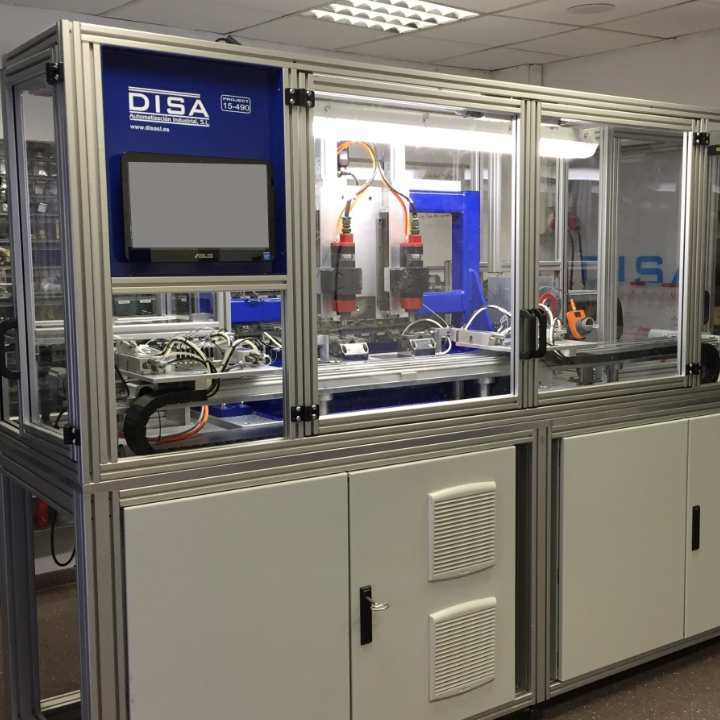
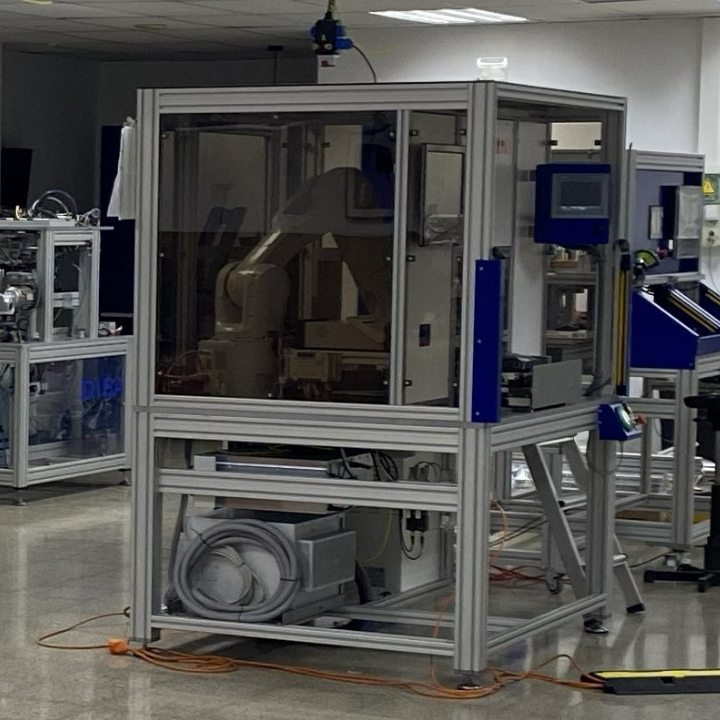
This case study provides a high-stakes investigation into how Disa Automatización Industrial SL modernised its procurement and design cycles by abandoning legacy 2D workflows in favour of a 3D-first digital manufacturing strategy. For an organisation where 80% of output services the automotive sector, moving away from manual annotations was not merely an operational preference but a strategic mandate to ensure data integrity and remain competitive in a market demanding accelerated delivery cycles.

Profile Summary

Company

Disa Automatizacion Industrial SL (Spain)

Industry

Automotive

Pharmaceutical

Robotics

Country

Spain

Use Case

Specialised Machine Construction

Prototyping

Design Validation & DFM Feedback

Service

CNC Milling

CNC Turning

Sheet Metal fabrication

Finishing and Treatments

In the automotive sector, we are constantly designing special machines where every single part is different, and the most significant change for our team has been the 100% elimination of 2D drawings. Previously, I spent an excessive amount of time on manual documentation, where it was easy to make mistakes or lose critical annotations like tolerances and PMI. Now, that risk is gone because I upload the 3D assembly directly from Autodesk Inventor to the platform. It has completely transformed our speed to market; if the design is correct in my software, I know it will be correct when it arrives from meviy. It is simply too fast and too reliable to go back to the old way of working.
ALBERTO OJEDA
Engineer

Operational profile

Customer
Disa Automatizacion Industrial SL (Spain)
Industry
Automotive (80%), Pharmaceutical, and Robotics
Core challenge
– Administrative burden from manual 2D drawing creation.

– High risk of annotation and tolerance errors.

– Lack of synchronisation between 3D and 2D data.
Why was meviy selected as the partner?
Instant quoting; direct-from-3D manufacturing without 2D documentation; consistent finish quality; stable pricing
Capabilities used
CNC milling, turning and sheet metal (iron, steel, aluminium); surface finishing; angled holes
Quantified results
- 100% elimination of 2D drawings, removing days of administrative overhead per project.

- Reduction in quoting time from several days to mere seconds via real-time digital feedback.

- Zero transcription errors, ensuring bespoke components perfectly match CAD intent.

- Enhanced margin protection through price stability and lower costs for single-part orders.

Before meviy

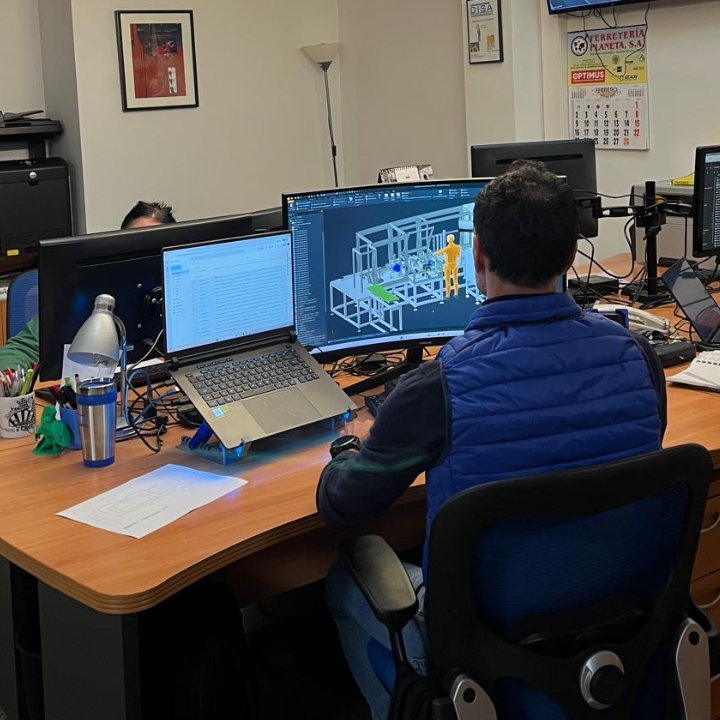
In traditional engineering environments, 2D-dependent workflows act as a “friction tax” on innovation. For Disa, the reliance on manual documentation created a persistent disconnect between the engineering office and the production floor, siphoning off technical capacity and introducing unnecessary latency into the supply chain.

The Documentation Deadlock

The legacy process was defined by several  constraints that undermined technical efficiency:


  • manual documentation of bespoke components: engineers were required to generate exhaustive 2D drawings for every custom part after completing the 3D CAD model, a repetitive task that offered zero added  value.
  • protracted lead times: procurement through the local supplier network typically involved a five-to-six-week wait, a timeline increasingly incompatible with modern automotive demand.
  • data fragmentation and PMI (eng. Product Manufacturing Information) loss: there was a chronic lack of synchronisation between 3D CAD data and 2D annotations. The manual transcription of tolerances and PMI often resulted in the loss of critical design intent during the 2D conversion.


Escalation of business risk


These constraints weakened the firm’s position and disrupted the value chain. Engineers spent valuable time on documentation instead of design and new business, limiting capacity and growth.

Without instant pricing, the team could not provide immediate cost feedback to price-sensitive clients, reducing competitiveness.


Over time, manual transcription errors became a clear quality and regulatory risk. Lost annotations led to scrapped parts and assembly delays. The process required structural change, not minor internal adjustments.
Decision point: why was meviy selected as the manufacturing partner for this project?

The shift to meviy was a strategic necessity, marking a move toward a “3D-first” manufacturing philosophy. It was evident that traditional suppliers remained documentation-heavy and slow; therefore, Disa required a partner capable of transforming custom fabrication into a process as predictable as procuring commodity items.

The selection was based on four distinct pillars of digital infrastructure:


  • Digital infrastructure
    Engineers can upload 3D files directly to meviy. The workflow removes the need for 2D drawings.
  • Instant quoting and transparency
    The system updates prices in real time. Alberto can see immediately how changes in quantity, material or surface treatment affect the project budget.
  • Design for manufacturability feedback
    The platform checks manufacturability during upload. If a feature cannot be machined, it is flagged at once, allowing iteration before production begins.
  • Unified procurement
    Custom-machined parts and standard mechanical components, such as screws and handles, can be ordered within one digital basket. This consolidates the supply chain under a single provider.
  • Quality of finish
    CNC milling finishes proved more consistent than those from local alternatives. Alberto described the process as predictable and reliable, comparable to purchasing a standard part.

This transition addressed the core failures of the local supplier network by replacing manual uncertainty with a standardised, digital-first interface.

After meviy: the workflow in practice

The implementation of meviy was an iterative journey. Over a two-year period, the engineering team aligned their internal design parameters with the platform’s digital interface, ensuring their CAD standards were fully synchronised with automated manufacturing requirements.

The technical scope of this modernised workflow includes:


• Materials & finishes: precise execution in iron, steel, and aluminium, including specialised black anodising for specific automotive components.


• Complex geometries: seamless handling of angled holes and complex surface finishes that previously required arduous 2D detailing.


• Iterative design adjustment: the meviy platform provides granular DfM feedback, such as flagging holes placed too close to walls or tolerances beyond achievable limits, allowing for immediate rectification within the CAD environment.


The reliability of this synchronisation is confirmed by Lead Engineer Alberto: “The most important change is that I no longer create drawings. I upload the 3D model. If everything is correct in my software, it will be correct in meviy.”

Proof: measurable results

Digital manufacturing has transformed variable fabrication costs into predictable, “off-the-shelf” line items, providing Disa with operational agility.

Metric
Before meviy
With meviy
Quoting speed
Several days
Seconds
Drawing requirement
Manual creation per part
100% Eliminated
Transcription errors
High risk (Manual entry)
Zero (Direct CAD upload)
Price stability
Volatile / Market-dependent
High (Historical quotes respected)

What did we learn from Disa Automatizacion Industrial SL?

The most important change is that I no longer create drawings. I upload the 3D model. If everything is correct in my software, it will be correct in meviy.

In my case it is more economical and the result is better than other suppliers. I ordered a part two years ago and the price is the same today. Material prices change, but meviy respected the quotation.

When I handled many drawings, I made mistakes and lost annotations or tolerances. Now I upload the 3D model directly. That problem has disappeared.

Broader business implications

The Disa transformation serves as a definitive blueprint for organisations seeking to modernise their engineering-to-procurement lifecycle. In precision-heavy sectors, the transition to a 3D-first model has evolved from a progressive advantage into a competitive necessity.

Three critical strategic takeaways emerge:


1. NPI (News product introduction) acceleration: removing the 2D drawing phase allows for immediate movement from CAD to production, significantly shortening New Product Introduction cycles.


2. Inventory and BOM optimisation: with no minimum order requirements, Disa supports leaner operations by ordering single bespoke parts only when needed, reducing capital tied up in excess stock.


3. CapEx efficiency: the meviy platform provides instant access to advanced CNC and sheet metal capabilities without the requirement for heavy internal investment in machinery.

Forward look

As the partnership evolves, Disa looks forward to integrating even more complex geometries and specialised pipe threads, into their digital workflow. The meviy platform has successfully transformed low-volume, high-complexity fabrication into a standardised, reliable digital asset.