



A shim plate is a thin piece of material that fills small gaps between parts — to level a fixture, eliminate play or fine-tune the fit of a prototype. Choosing the right material, thickness and shape makes the difference between a quick, precise adjustment and an assembly that never quite fits.
This article explains how shim plates are used, which materials are available, what to look for when selecting them, and how they are manufactured.
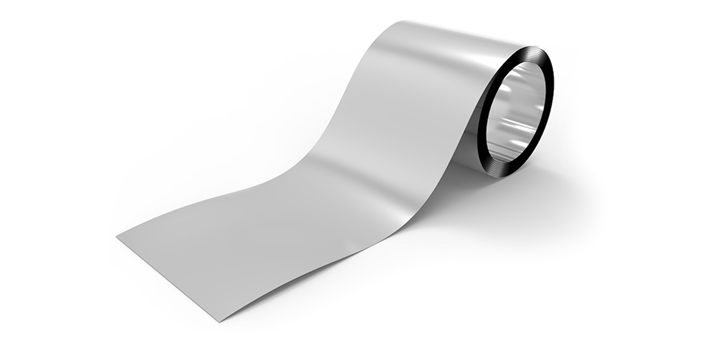
What is a shim?
A shim is a thin piece of material used to fill small gaps between parts in an assembly. There are two main types: shim plates, which are flat and plate-shaped, and shim rings, which are circular. Shim plates are not always rectangular — they can have holes or complex contours to fit specific components. Shims can also be slotted into a "C" or "U" shape so they can be inserted and removed without disassembling the assembly.
Shims are typically made of metal sheet less than 1 mm thick. As a rule of thumb, anything thicker than 1 mm is usually referred to as a spacer.
How shims are used
In production, shim plates are mainly used to adjust the height or position of tools and equipment:
- Levelling jigs, fixtures and machine components by placing shims between parts
- Filling gaps to reduce play, rattling and vibration
- Restoring alignment, because misaligned tools and machines cause assembly errors and reduce efficiency
In development, shim plates are used to adjust the dimensions of prototype parts. When components with slight dimensional deviations are assembled, gaps can occur that impair function. A shim lets you fine-tune these dimensions quickly. Shims are also used to test different dimensions and find out which size delivers the desired result.
Shim materials
Shim plates are available in different materials, each suited to specific applications:
| Property | Stainless steel | Low-carbon steel |
|---|---|---|
| Example | EN 1.4301 equiv. | EN 1.0330 equiv. (cold rolled) |
| Strength | High | Good |
| Corrosion resistance | Very good | Low — needs coating, plating or oil |
| Heat resistance | Very good | Good |
| Thickness accuracy | Very high, especially in hard-rolled condition | Good |
| Cost | Higher | Lower |
| Typical use | Machinery and precision adjustments | Cost-sensitive adjustments in dry environments |
Stainless steel shim plates are the standard choice in machine building thanks to their strength, corrosion resistance and precise thickness. Low-carbon steel is a cost-effective alternative that is easy to process. As a cold rolled sheet, it offers good thickness accuracy — see hot vs. cold rolled steel — but it rusts and needs protection.
How to choose the right shim
- Thickness: shim plates typically range from a few thousandths of a millimetre up to 1.0 mm, and thicker versions are available. Choose the thickness according to the adjustment you need.
- Tolerance: check the thickness tolerance — for fine adjustments, a tight tolerance matters as much as the nominal thickness.
- Burrs and flatness: burrs and warping change the effective thickness and reduce the accuracy of the adjustment. Choose burr-free, flat shims or have them deburred.
- Material: for high precision, choose stainless steel, which offers a consistent thickness.
- Shape: ring-shaped shims suit shafts, while C-shaped shims are easier to remove after assembly. For one-off adjustments, shim stock can be cut to any shape.
Manufacturing methods for shims
Shim plates can be produced with different methods, depending on quantity and required precision:
| Method | Tooling | Best for | Accuracy | Burrs |
|---|---|---|---|---|
| Punching | Dedicated die required | Large quantities | High | Possible — deburring may be needed |
| Wire EDM | None | Small quantities, hard materials | Very high | Practically none |
| Laser cutting | None | Prototypes, small and medium batches, complex shapes | High | Minimal |
- Punching: the material is sheared with a die. Punching is economical for large quantities — typically from around 1,000 parts — but the dedicated die causes high initial costs, and the parts may need deburring.
- Wire EDM: an electrically charged thin wire erodes the material without contact. This allows very precise cuts, even in hard metals, practically without burrs. It is suited to small quantities.
- Laser cutting: a fast, flexible method for thin metal sheets that achieves high dimensional accuracy and complex shapes without any tooling. It is ideal for prototypes and small to medium batches. For very large quantities, punching is usually cheaper per part, and very thin foils need suitable parameters to avoid heat distortion.
Custom shim plates from meviy
meviy manufactures individually designed custom parts from your own 3D CAD data — not standard or catalogue parts. Upload your shim as a flat 3D model, select the material and thickness, and get the price and delivery date instantly. These thicknesses and tolerances are available:
| Material | Thickness | Thickness tolerance |
|---|---|---|
| EN 1.0330 equiv. | 0.1 / 0.2 mm | ±0.03 mm |
| EN 1.0330 equiv. | 0.3 mm | ±0.04 mm |
| EN 1.0330 equiv. | 0.5 mm | ±0.06 mm |
| EN 1.4301 equiv. (H) | 0.05 mm | ±0.005 mm |
| EN 1.4301 equiv. (H) | 0.1 mm | ±0.02 mm |
| EN 1.4301 equiv. (H) | 0.2 mm | ±0.03 mm |
| EN 1.4301 equiv. (H) | 0.3 mm | ±0.035 mm |
| EN 1.4301 equiv. (H) | 0.5 / 0.8 mm | ±0.04 mm |
| EN 1.4301 equiv. (H) | 1.0 mm | ±0.05 mm |
- Outer dimensions up to 850 × 350 mm in steel and 850 × 300 mm in stainless steel
- Cutouts, through holes, slotted and rectangular holes and free-form contours — cut from sheet like other flat parts, see laser cutting
- Flat shim plates only — bent shims are not available
- Other parts in thicker sheet through sheet metal fabrication
- Instant price and lead time — no 2D drawing required
Frequently asked questions about shim plates
What is the difference between a shim and a spacer?
Both fill a gap between parts. As a rule of thumb, shims are thin — usually less than 1 mm — and are used for fine adjustments. Thicker parts that create a defined distance are usually called spacers.
What thicknesses are shim plates available in?
Shim plates typically range from a few thousandths of a millimetre up to 1.0 mm. At meviy, you can order custom shim plates from 0.05 mm in stainless steel and from 0.1 mm in steel, each with a defined thickness tolerance.
Should I choose stainless steel or steel shims?
Choose stainless steel for precise adjustments, humid environments and long service life — it does not rust and has a very consistent thickness. Low-carbon steel is a cost-effective option for dry environments, but it needs corrosion protection.
Can I order custom shim plates with holes?
Yes. With meviy, you upload your shim as a flat 3D model with any cutouts, through holes or free-form contours you need, and get an instant quote. Bent shims are not available.
Choosing the right shim plate
Shim plates play an important role in manufacturing because they enable precise dimensional adjustments. Depending on the application, you may need shims in different shapes, materials and thicknesses. Pay particular attention to the material and the thickness tolerance — and choose a manufacturing method that suits your quantity and precision requirements.