

PP, ABS and nylon are three of the most widely used engineering plastics — but they behave very differently. In short: PP (polypropylene) is the lightest, most affordable and most chemical-resistant; ABS is tough, impact-resistant and offers the best surface finish; MC nylon is the strongest and most wear-resistant, but it absorbs water.
This PP vs ABS vs nylon comparison explains the properties, strengths and weaknesses of each plastic, compares them side by side and shows which one to choose for your machined parts.
PP vs ABS vs nylon at a glance
The table compares the three plastics as they are used for CNC-machined parts. Measured values are reference values for meviy's standard grades; they are not guaranteed and vary with the grade.
| Property | PP | ABS | MC nylon |
|---|---|---|---|
| Full name | Polypropylene | Acrylonitrile butadiene styrene | Monomer cast nylon (cast PA6) |
| Structure | Semi-crystalline thermoplastic | Amorphous thermoplastic | Semi-crystalline engineering plastic |
| Tensile strength | Approx. 33–34 MPa | Approx. 39–54 MPa | Approx. 96 MPa |
| Young's modulus (stiffness) | Approx. 1,400 MPa | Approx. 1,900–2,800 MPa | Approx. 3,400 MPa |
| Density | 0.91 g/cm³ | 1.05 g/cm³ | 1.16 g/cm³ |
| Continuous service temperature | Approx. 100 °C | Approx. 60–95 °C | Approx. 120 °C |
| Impact resistance | Good (brittle in the cold) | Very good | Good |
| Wear resistance and sliding | Good | Moderate | Excellent |
| Chemical resistance | Excellent (acids, alkalis, solvents) | Moderate (sensitive to many solvents) | Very good against oils, fuels and solvents; poor against strong acids |
| Water absorption | Practically none | Low | High (dimensions change) |
| Machinability | Fair (soft, burrs) | Good | Good |
| Bonding and printing | Difficult | Easy | Possible with pre-treatment |
| Price | Low | Low to medium | Medium |
What is PP (polypropylene)?
PP, or polypropylene, is a semi-crystalline thermoplastic and one of the most common plastics worldwide. With a density of 0.91 g/cm³, it is the lightest of the three — it even floats on water. PP is inexpensive, resistant to almost all acids, alkalis and solvents, and an excellent electrical insulator.
- Lightest and most affordable of the three plastics.
- Excellent chemical resistance and practically no water absorption.
- Good electrical insulation and good fatigue resistance (ideal for film hinges).
- Highest heat resistance among the low-cost commodity plastics, up to approx. 100 °C in continuous use.
Its weaknesses: PP is relatively soft, has low stiffness, becomes brittle at low temperatures and degrades in sunlight without UV stabilisation. Its chemical resistance also makes it hard to bond or print.
What is ABS?
ABS (acrylonitrile butadiene styrene) is an amorphous thermoplastic made of three components: acrylonitrile provides chemical and heat resistance, butadiene provides toughness, and styrene provides stiffness and a glossy surface. The result is a tough, dimensionally stable plastic with a very good surface finish.
- Very good impact resistance and good shock absorption, even at low temperatures.
- Excellent surface finish; easy to paint, print and bond.
- Good dimensional stability thanks to low water absorption.
- Good machinability and easy to process by injection moulding.
Its weaknesses: ABS is sensitive to many solvents, has the lowest heat resistance of the three and is not UV-resistant without protection.
What is MC nylon?
MC nylon stands for monomer cast nylon. It is a polyamide 6 (PA6) produced by casting the liquid monomer directly into a mould, where it polymerises into large plates, rods and tubes. These semi-finished products are then machined into parts. Compared with extruded PA6, cast nylon has a higher crystallinity, which makes it stronger, harder and more wear-resistant.
- Highest strength and stiffness of the three plastics.
- Excellent wear resistance and good sliding properties, ideal for moving parts.
- Very good resistance to oils, greases, fuels and many solvents.
- Low weight compared with metal: often used to replace bronze or steel in wear parts.
Its main weakness is water absorption. MC nylon absorbs about 2% moisture in normal indoor air and up to about 6–7% when saturated with water. The part swells and loses some strength and stiffness, so tight tolerances cannot be held in humid or wet environments. Strong acids also attack polyamide.
PP vs ABS vs nylon: detailed comparison
Strength and stiffness
MC nylon is clearly the strongest: its tensile strength of around 96 MPa is roughly twice that of ABS and almost three times that of PP. It is also the stiffest. ABS sits in the middle, while PP is the softest and most flexible, which makes it unsuitable for parts with high structural loads.
Wear resistance and friction
For gears, rollers, bushings and guides, MC nylon is the best choice of the three. It combines high wear resistance with good sliding properties and dampens noise and vibration. PP and ABS wear faster than nylon under sliding contact.
Chemical resistance
PP has the best chemical resistance: it withstands acids, alkalis, salt solutions and most solvents. MC nylon is very resistant to oils, greases, fuels and many solvents, but strong acids and some alkalis attack it. ABS is the most sensitive — ketones, esters and many chlorinated solvents dissolve or crack it.
Water absorption and dimensional stability
PP absorbs practically no water and ABS only a little, so both keep their dimensions in humid environments. MC nylon absorbs significantly more moisture, which changes its dimensions over time. For precision parts in humid or wet conditions, choose PP, ABS or POM (acetal) instead of nylon.
Temperature resistance
MC nylon tolerates the highest continuous service temperature (approx. 120 °C), followed by PP (approx. 100 °C) and ABS (approx. 60–95 °C). At low temperatures, ABS stays tough, while PP becomes brittle.
Machinability
ABS and MC nylon machine well and produce clean surfaces. PP is soft and tends to form burrs, and its high thermal expansion makes tight tolerances harder to hold. Plan for slightly wider tolerances on PP parts and allow MC nylon parts to adjust to the ambient humidity before measuring.
Bonding, painting and printing
ABS is the easiest to bond, paint and print. PP is very difficult to bond or print without surface pre-treatment because of its low surface energy. MC nylon can be bonded with suitable adhesives after surface preparation.
Cost
PP is the most affordable of the three, followed by ABS. MC nylon costs more, but it is still much cheaper than high-performance plastics such as PEEK — and it often replaces metal parts, which can lower the overall cost.
Recyclability
All three are thermoplastics and can be recycled in principle. PP is the most widely recycled of the three. Recycling ABS and nylon is technically possible but less common because they are collected in smaller volumes.
Typical applications of PP, ABS and nylon
| Plastic | Typical machined parts | Typical industries |
|---|---|---|
| PP | Chemical-resistant tanks, covers, fittings, manifolds, insulating plates, laboratory equipment | Chemical and process industry, medical and laboratory technology, food processing, packaging |
| ABS | Housings, covers, prototypes, jigs, visible components, panels | Electronics, automotive interiors, mechanical engineering, prototyping |
| MC nylon | Gears, rollers, pulleys, bushings, slide pads, wear strips, guide rails | Mechanical engineering, conveyor and handling systems, automation, packaging machines |
How to choose between PP, ABS and nylon
Start with the most important requirement of your part:
- Choose PP if the part comes into contact with chemicals or water, must be light and low-cost, and carries only light loads.
- Choose ABS if the part needs impact resistance, a good surface finish or must be painted or bonded — for example housings, covers and prototypes.
- Choose MC nylon if the part must be strong and wear-resistant, slides or rotates, or replaces a metal part — for example gears, rollers and wear strips.
- Consider POM (acetal) if you need wear resistance and tight tolerances in a humid environment: it absorbs much less water than nylon.
Machined plastic parts in PP, ABS and MC nylon with meviy
meviy, the on-demand manufacturing platform by MISUMI, produces individually designed plastic parts directly from your 3D CAD data — not catalogue or standard parts. PP, ABS and MC nylon are all available for CNC milling and CNC turning, alongside other plastics such as POM, PEEK and PPS.
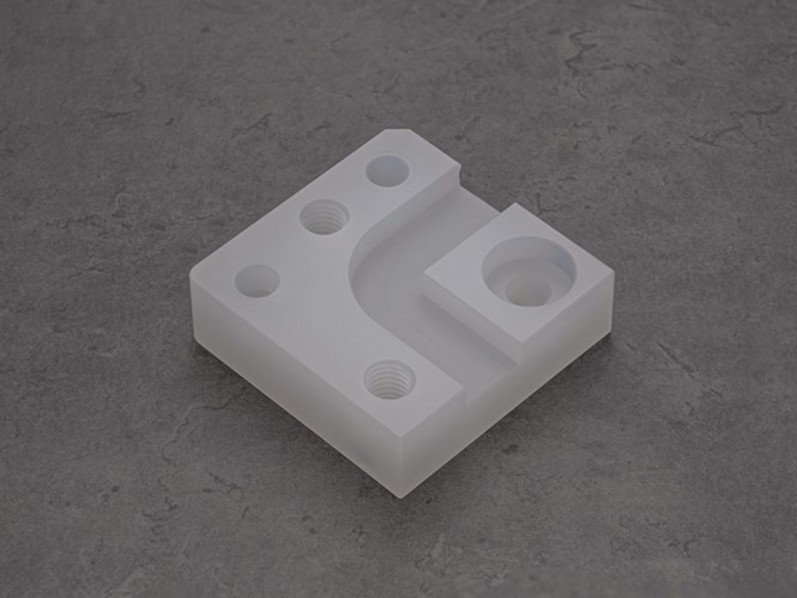
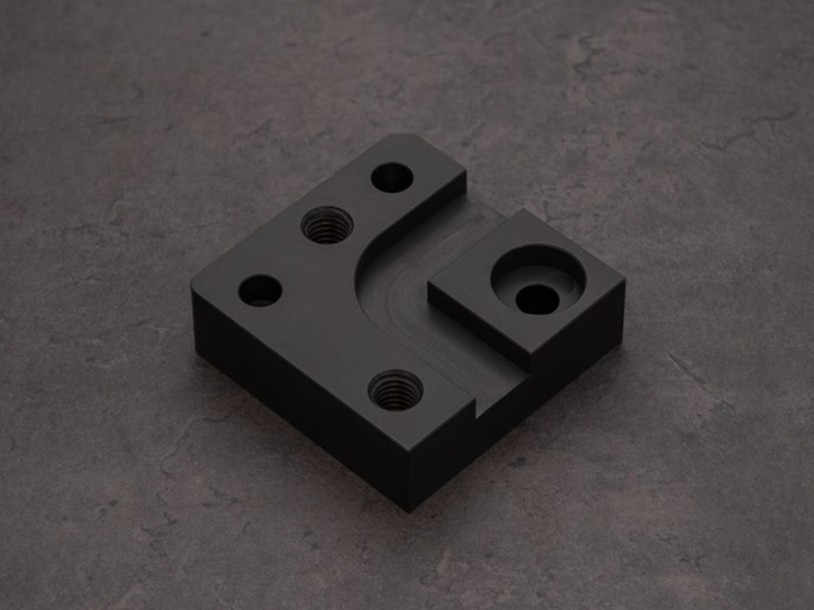
- PP: standard grade, white.
- ABS: standard grade, natural colour.
- MC nylon: standard (blue or ivory), conductive (black), anti-static (black) and weather-resistant (black ash).
Upload your model, choose the material and get the price and lead time instantly. Tolerances, threads and hole specifications are set directly in the 3D viewer — no 2D drawing required. Learn more about CNC machining with meviy.
Frequently asked questions about PP, ABS and nylon
What is the difference between PP and ABS?
PP is lighter, cheaper and far more resistant to chemicals and water. ABS is stiffer, more impact-resistant at low temperatures, has a better surface finish and is easy to paint and bond. Choose PP for chemical exposure and ABS for housings and visible parts.
Is nylon stronger than ABS?
Yes. MC nylon has a tensile strength of around 96 MPa, about twice that of ABS, and is much more wear-resistant. ABS, however, keeps its dimensions better in humid environments because it absorbs far less water.
Which plastic is best for gears and sliding parts?
MC nylon is the best of the three for gears, rollers, bushings and wear strips thanks to its high wear resistance and good sliding properties. If the part must also hold tight tolerances in a humid environment, POM is a good alternative.
Does MC nylon absorb water?
Yes. MC nylon absorbs about 2% moisture in normal air and up to about 6–7% when saturated with water. The part swells slightly and its strength decreases, so allow for dimensional changes in humid or wet applications.
Which plastic is the most chemical-resistant: PP, ABS or nylon?
PP is the most chemical-resistant of the three and withstands acids, alkalis and most solvents. MC nylon resists oils, fuels and solvents but not strong acids. ABS is the most sensitive to solvents.
Conclusion: PP vs ABS vs nylon
PP is the light, low-cost choice for parts exposed to chemicals and water. ABS is the tough all-rounder for housings, covers and visible parts. MC nylon is the strongest and most wear-resistant option for gears, rollers and sliding parts — as long as you allow for its water absorption. Compare the requirements of your part with the table above, and you will find the right plastic quickly.