



Carbon steel is one of the most widely used materials across industries thanks to its balance of strength, workability, and cost. In this guide we cover what carbon steel is, its properties, and the benefits and drawbacks of its most common grade — SS400.
What is carbon steel?
Before looking at carbon steel specifically, it helps to clarify what steel is. Steel is an iron-based alloy. Pure iron is brittle and prone to rust, which makes it unsuitable for most industrial applications. To address this, carbon is added to iron — along with elements such as manganese and phosphorus — to create an alloyed material. The term steel specifically refers to compositions with a carbon content ranging from roughly 0.02% to 2.14%, whereas iron is generally classified as having below 0.008% carbon.
As the carbon content in iron increases, the material becomes harder but also more brittle. While it grows less prone to deformation under load, it becomes more susceptible to breaking — especially under sudden impact or forces beyond its tolerance. This is why materials used for machinery and structures need to balance both hardness and strength.
Steel contains just the right amount of carbon to balance hardness and strength in iron. As mentioned, other elements such as manganese, chromium, and titanium are added to produce alloy steel and special steel, each with distinct characteristics — for example, rust resistance or high-temperature resistance developed for specific purposes.
Among the different types of steel, carbon steel refers to steel that does not fall under alloy steel or special steel. In other words, it is steel in its natural state, without the addition of specialised elements or processes. Carbon steel is defined by having an elemental content of elements other than iron and carbon below specified values — for instance, chromium limited to 0.3% or less and titanium to 0.05% or less.
Carbon steel is classified by its carbon content into three categories: low, medium, and high carbon steel. Low carbon steel has a carbon content of roughly 0.02% to 0.25%, medium carbon steel between 0.25% and 0.6%, and high carbon steel from 0.6% to 2.14%.
The most widely used type of steel: what is SS400?
SS400 belongs to a category of SS materials (structural steel) known as general structural rolled steel. It is a structural steel with high tensile strength, equal to 400 N/mm² or more.
SS400 is known for being more affordable and accessible than many other metal materials. It is easy to process through methods such as welding and cutting, and it is available in sheet form — making it common for sheet metal processing, laser cutting, and similar applications. However, SS400 cannot undergo heat treatment (annealing), and it is prone to rusting, so it requires anti-corrosion treatments such as plating or blackening.
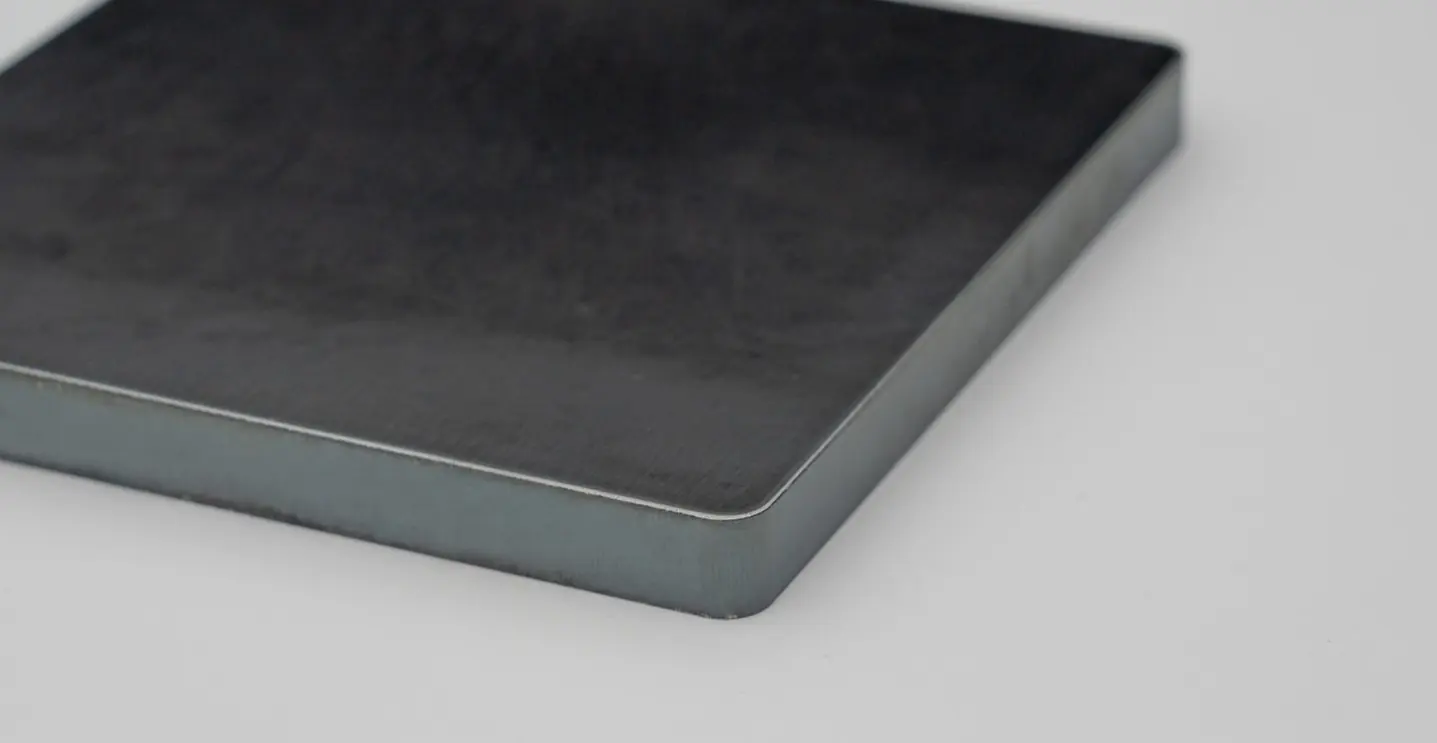
Applications of SS400
SS400 is used as a structural material for bridges, ships, and much more, spanning a wide range of applications from machinery to construction. When engineers think about building something from iron or steel, it is no exaggeration to say that SS400 is the material they consider first — it is that widely and commonly used.
Advantages and disadvantages of SS400
Like any material, SS400 involves trade-offs. Its low cost, availability, and ease of processing make it a default choice for many structural parts, but its low carbon content and rust susceptibility set clear limits.
Advantages
- Affordable and readily available.
- Easy to weld.
- Suitable for processing such as sheet metal work and cutting.
- Highly versatile.
As a widely distributed and readily available material, SS400 is more affordable than many other metals. It is softer than materials like stainless steel, making it easy to process through cutting and sheet metal work for a broad range of applications. Its low carbon content and resistance to heat-related effects also make it suitable for welding — though for thicker materials (25 mm and above) it can be better to use welding-specific grades.
Disadvantages
- Cannot undergo heat treatment (annealing).
- Relatively soft among iron and steel materials.
- Prone to rust, requiring corrosion prevention such as plating or painting.
When stronger materials are required, other options need to be considered. Because of its low carbon content, SS400 cannot undergo heat treatment, which prevents increasing surface hardness through such processes. And since it is susceptible to rust, it requires protection through plating, painting, or black oxide (oxidation film).
Common surface treatments for SS400
Given its susceptibility to rust, SS400 often undergoes surface treatments such as nickel plating or chrome plating. In cases where high corrosion resistance is not required — for example, in areas not exposed to water — a black oxide treatment can be the best solution.
- Iron tetroxide film (blackening): iron surfaces are oxidised using chemicals to create a coating of tri-iron tetroxide (Fe₃O₄), which helps prevent corrosion.
- Electroless nickel plating: nickel plating applied through chemical reduction. Combined with heat treatment, it increases surface hardness and improves resistance.
- Hard chromium plating: thicker than decorative chromium plating, this enhances wear resistance and sliding properties.
- Trivalent chromate: a post-plating treatment performed to improve plating quality, primarily used for electro-galvanised plating.
Conclusion
Carbon steel is an essential and versatile material found across numerous industries and applications. Among its various types, SS400 stands out as a widely used and reliable grade, valued for its mechanical properties and cost-effectiveness. Its strength, weldability, and machinability make it a preferred choice for structural and engineering purposes. By understanding the characteristics and benefits of SS400 and other carbon steel variants, engineers and manufacturers can make informed decisions when selecting materials for their projects.