



A metal bracket is a small component with an important job: it strengthens, connects and fixes parts in machines, fixtures and structures. From the simple L-shaped bracket to the Z-shaped bracket that holds a sensor in place, brackets are everywhere in mechanical design — and the type you choose directly affects strength, installation space and cost.
This guide explains what a metal bracket is, compares the seven major types of brackets, shows how they are manufactured, and gives you practical criteria for selecting the right bracket for your application.
What is a metal bracket?
A bracket is a metal fitting used to increase the strength of machine components or to connect different parts. Brackets are also found in lighting fixtures and camera equipment, but this article focuses on their use as machine components.
Brackets come in many shapes, depending on their purpose and application — from furniture to automobiles, electrical equipment, medical devices and construction. Common materials are metal and plastic, and typical fabrication methods include sheet metal processing, cutting and injection moulding. Most brackets have holes for fastening with screws or bolts. Because their characteristics vary with shape and material, the right bracket always depends on the application.
Major types of brackets
There are seven main types of brackets, each with its own strengths and typical uses. The table gives you a quick overview; the sections below explain each type in detail.
| Bracket type | Strength | Main benefit | Typical applications |
|---|---|---|---|
| L-shaped | Lower | Compact, affordable, widely available | Shelf supports, machine tools, electrical equipment |
| Triangular | High | Diagonal brace carries heavy loads | Wall-mounting heavy objects, reinforcing machine structures |
| Square | Moderate | Shelves, pipes or other parts can pass through | Multi-level shelves, routing pipes and components |
| I-shaped | Lower | Neat look with minimal wall contact | Shelf supports on bracket rails, tight installation areas |
| A-shaped | Lower | Clean way to hold poles and rods | Hanging poles and rods on walls |
| Z-shaped | Moderate | Connects parts at different heights | Sensor mounting, automotive parts, thicker components |
| Convex | High | Fixed on two surfaces, clears protrusions | Automotive parts, heavy loads, vibration-sensitive assemblies |
L-shaped bracket
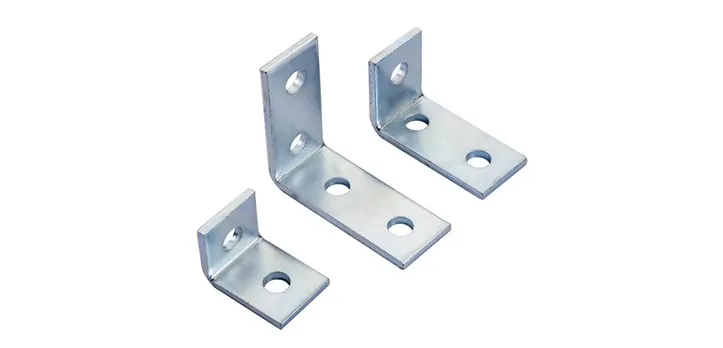
The L-shaped bracket is the best-known type. It is used as a shelf support and in industrial products such as machine tools and electrical equipment. Because it is sold widely as a general-purpose part, it is affordable and easy to source. Its simple shape takes up minimal space and stays unobtrusive. The drawback: it is less robust than the other bracket types.
Triangular bracket
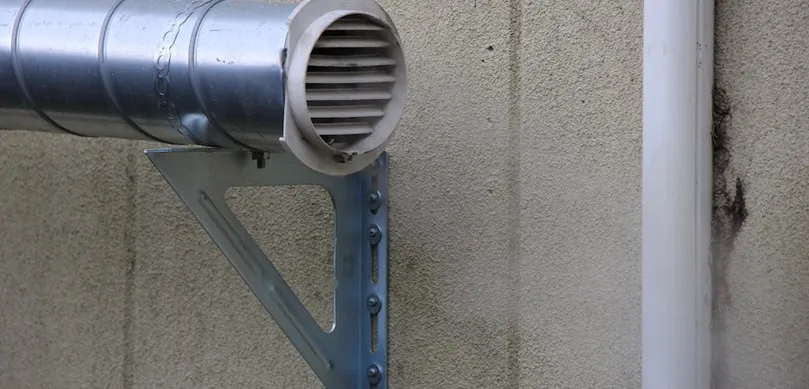
A triangular bracket adds a diagonal brace to the L-shape, giving it its triangular form and significantly higher strength. That makes it the right choice for wall-mounting heavy objects or for reinforcing the structure of industrial machinery. Because it takes up more volume than an L-shaped bracket, check the installation space carefully to avoid collisions with other components.
Square bracket
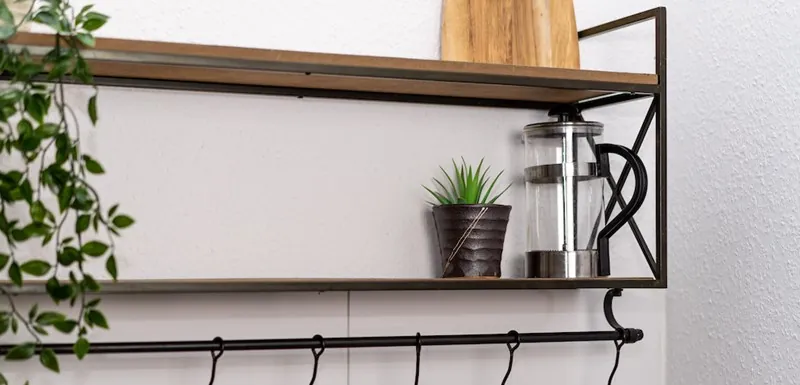
A square bracket replaces the diagonal brace of the triangular bracket with a square frame. It offers less strength than the triangular version, but other components such as shelves or pipes can pass through the bracket, and multiple shelves can be placed on it. This makes it a flexible option for many applications.
I-shaped bracket
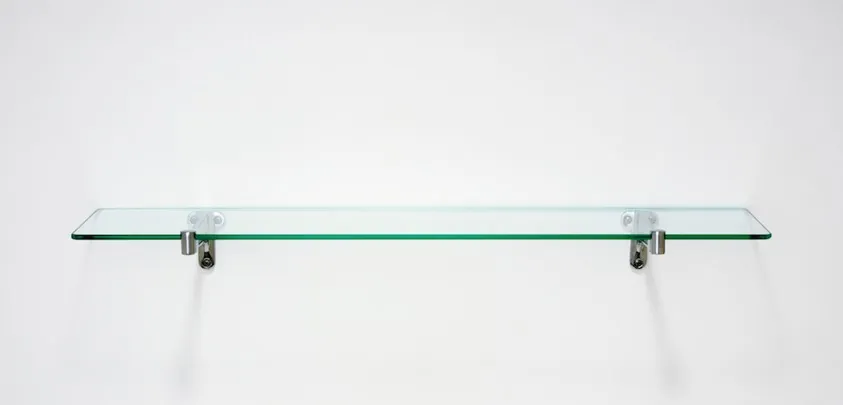
With an I-shaped bracket, the supporting part protrudes straight from the wall. Minimal wall contact gives it a neat, clean appearance, but its strength is relatively low — take care with heavy loads. Mounted directly on a wall, the small contact area concentrates the load and may require wall reinforcement. Mounting the I-shaped bracket on a bracket rail increases its strength and makes it easier to reposition.
A-shaped bracket
An A-shaped bracket holds poles or rods — for example for hanging clothes — through a hole shaped like the letter "a", and is mounted on a wall. It gives a clean look similar to a pipe hanger, but without legs. Overloading it concentrates stress on the wall, which can cause damage or loosen the screws.
Z-shaped bracket
Shaped like the letter "Z", this bracket connects or fixes parts at different heights. It is used for installing automotive parts, securing thicker components and fixing shelf boards, as well as for mounting small parts such as sensors. Since sensors are used in appliances, industrial machinery, processing fixtures and assembly fixtures, Z-shaped brackets exist in a wide variety of shapes and sizes.
Convex bracket
A convex bracket connects or fixes parts even where protrusions are in the way, without any interference. It is commonly used for automotive parts and woodworking products. Because it is fixed on two surfaces, it is stronger than a Z-shaped bracket — which means less vibration and the ability to carry heavy loads.
How metal brackets are manufactured
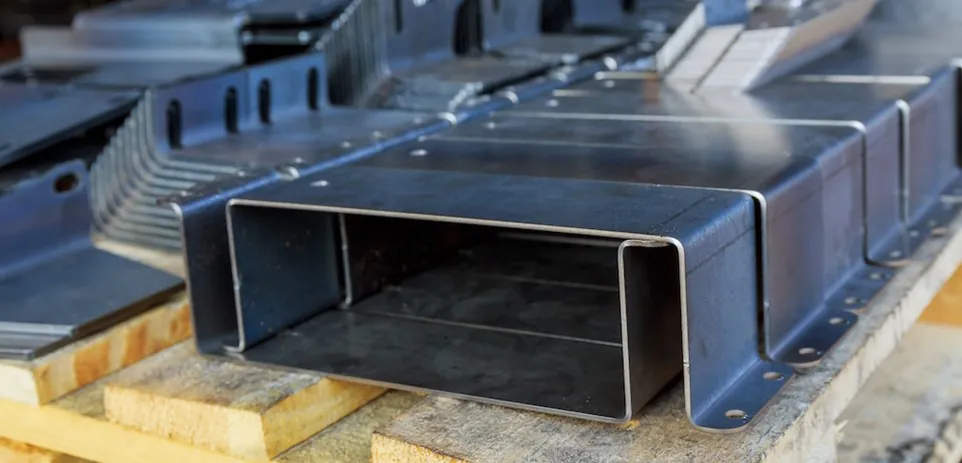
Because brackets have relatively simple shapes, they are usually made from straightforward materials such as flat bars or steel sheets. Flat bars are cut to size, holes are drilled for other components, and threads are tapped where screws will fix other parts. The choice of material and fabrication method depends on the application, the shape and the required precision.
A typical sheet metal bracket goes through these steps:
- Cut the blank and its hole pattern from sheet metal by laser cutting or punching.
- Form the legs to their final angle by bending — one bend for an L-shaped bracket, two for a Z-shaped or convex bracket.
- Where extra stiffness is needed, join gussets or ribs by welding.
- Apply a surface treatment if the bracket needs protection against rust and corrosion.
Thicker, compact brackets or brackets with precise mounting surfaces are often machined from solid stock or flat bar by CNC milling.
What brackets can you order from meviy?
meviy manufactures individually designed custom brackets from your own 3D CAD data — not standard or catalogue parts. You upload your model, get the price and delivery date instantly, and order the bracket exactly as you designed it.
- Bent sheet metal brackets in L, Z, convex or your own custom shape through sheet metal fabrication
- Machined brackets and mounting blocks through CNC machining
- Instant price and lead time directly from your 3D model — no 2D drawing required
- Design changes such as hole positions or thickness re-quoted in real time
How to choose the right bracket
Choosing by material
Brackets behave differently depending on their material. Stainless steel offers high strength and good corrosion resistance. Where strength is the main requirement, carbon steel can be a cost-effective choice. Plastic brackets are lightweight and suitable for complex shapes, but have lower strength than metal. Brackets with surface treatments for rust prevention and corrosion resistance are also available. Select the material based on temperature, humidity and exposure to salty air.
Choosing by purpose
Because brackets come in so many shapes, start from the specific purpose:
- Reinforcing or fixing large machine parts: L-shaped, triangular or convex brackets
- Shelf supports: L-shaped, triangular, square or I-shaped brackets
- Fixing sensors or small internal machine components: Z-shaped brackets
Choosing by dimensions
Verify the bracket dimensions — thickness, hole positions and so on — to make sure the bracket fits the installation target. If other components occupy the installation surface, opt for a smaller bracket. Where installation space is very limited, small I-shaped brackets are worth considering.
Choosing by load capacity
When brackets are used as shelf supports, knowing their load capacity is crucial: if a bracket fails, falling items can cause injuries. For load-bearing applications, triangular brackets are recommended. If the diagonal brace interferes with other components, use L-shaped brackets with a thicker plate or ribs instead. For fixing and reinforcing industrial machinery or electrical equipment, choose the bracket based on the expected load and carry out strength calculations where necessary to confirm structural integrity.
Frequently asked questions about metal brackets
What is a metal bracket used for?
A metal bracket strengthens, connects or fixes components. In mechanical engineering, brackets reinforce machine structures, hold sensors and small parts, and connect components at different heights or angles.
Which type of bracket is the strongest?
Of the seven common types, triangular and convex brackets offer the highest strength. Triangular brackets carry heavy loads through their diagonal brace; convex brackets are fixed on two surfaces, which reduces vibration. If space is tight, an L-shaped bracket with a thicker plate or ribs is a good alternative.
What is the best material for a metal bracket?
It depends on the environment and the load. Stainless steel combines strength with good corrosion resistance, carbon steel is a cost-effective choice where strength matters most, and plastic suits lightweight brackets with complex shapes and lower loads.
How are metal brackets made?
Most metal brackets are made from sheet metal or flat bar. Sheet metal brackets are cut by laser cutting or punching and then bent to shape; thicker or high-precision brackets are machined. Holes and threads are added for screws and bolts.
Finding the right bracket for your design
Whether it is a simple L-shaped bracket or a convex bracket for a vibration-sensitive assembly, each type solves a specific design problem. Start from the purpose, check installation space and load, then choose the material — and you will end up with a bracket that does its job reliably.