


Sheet metal fabrication is the process of turning flat metal sheets into functional parts through cutting, bending, and joining. It is one of the most widely used manufacturing methods, producing everything from enclosures and brackets to chassis and structural components across nearly every industry.
This guide explains what sheet metal fabrication is, walks through the key stages of the process, covers the most common materials and their properties, and shows which custom parts and industries rely on it. Whether you are new to sheet metal or refining a design, understanding these fundamentals helps you produce better parts.
What is sheet metal fabrication
Sheet metal fabrication is the process of forming thin, flat metal sheets into three-dimensional parts by applying force. It relies on the plasticity of metal — the property that allows it to be permanently reshaped without breaking. When force is applied to a metal sheet, it first deforms elastically and tries to spring back. Once the force exceeds the material's yield point, the deformation becomes permanent, allowing the sheet to hold its new shape. This controlled, permanent reshaping is the foundation of all sheet metal work.
Sheet metal itself is produced by rolling or pressing metal into uniform thicknesses, typically ranging from thin foils to plates several millimetres thick. Because sheets are flat and workable, they can be cut, bent, punched, and joined into an enormous variety of parts — which is why sheet metal is a cornerstone material in manufacturing, from consumer electronics to industrial machinery.
The sheet metal fabrication process
Sheet metal fabrication is not a single operation but a sequence of stages. Each part passes through several of these steps, depending on its design.
- Unfolding and programming. A 3D design is digitally "unfolded" into a flat pattern so it can be cut from a single sheet. Layouts are optimised to use material efficiently, and the machining program is prepared. This step is critical: a design that cannot be unfolded into a flat sheet cannot be fabricated.
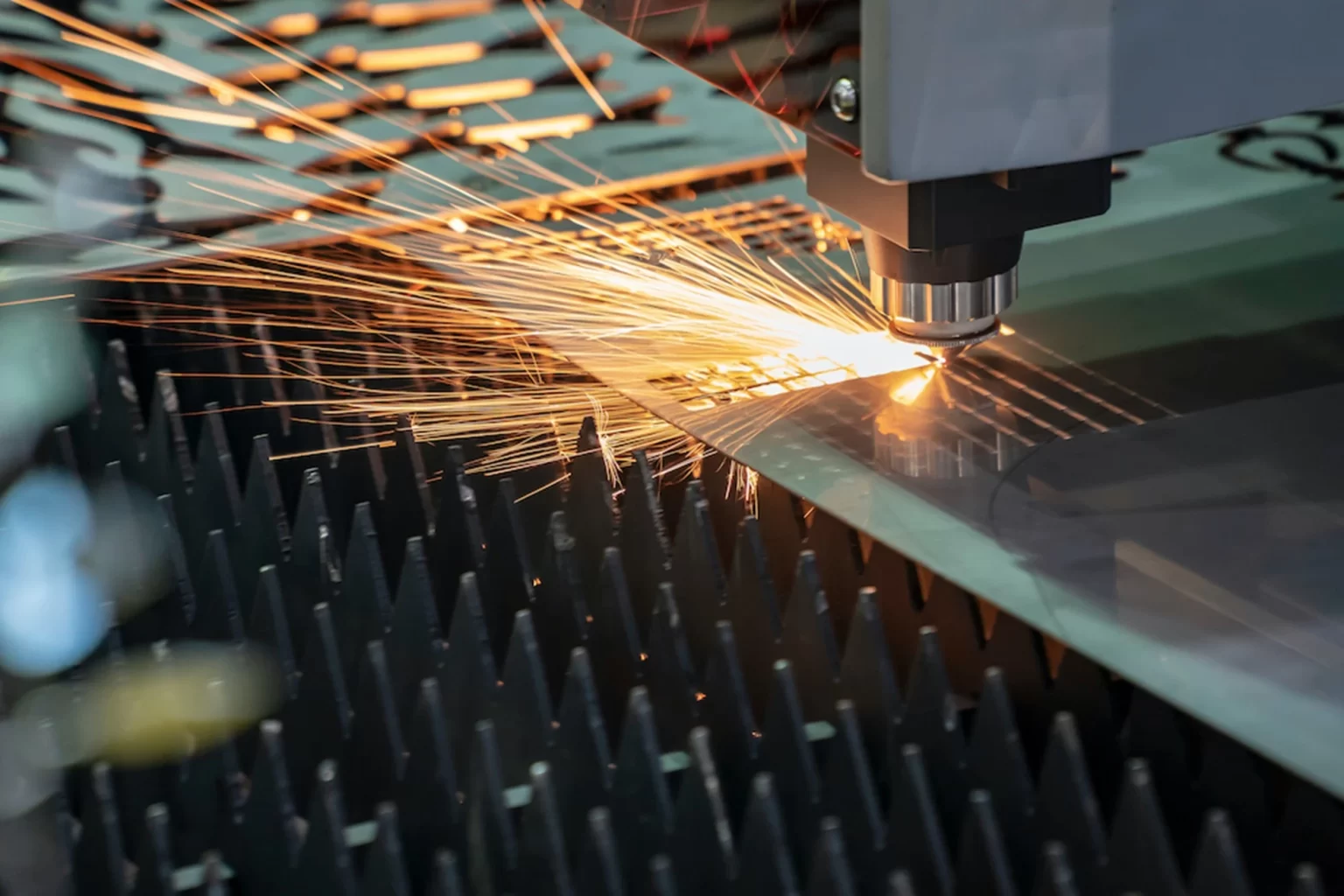
- Blanking and cutting. The flat outline (the blank) and any internal holes are cut from the sheet. This is done with laser cutting machines for fast, precise perimeters and large openings, or with turret punch presses for repetitive holes and formed features. Some facilities combine both in hybrid laser-punch machines.
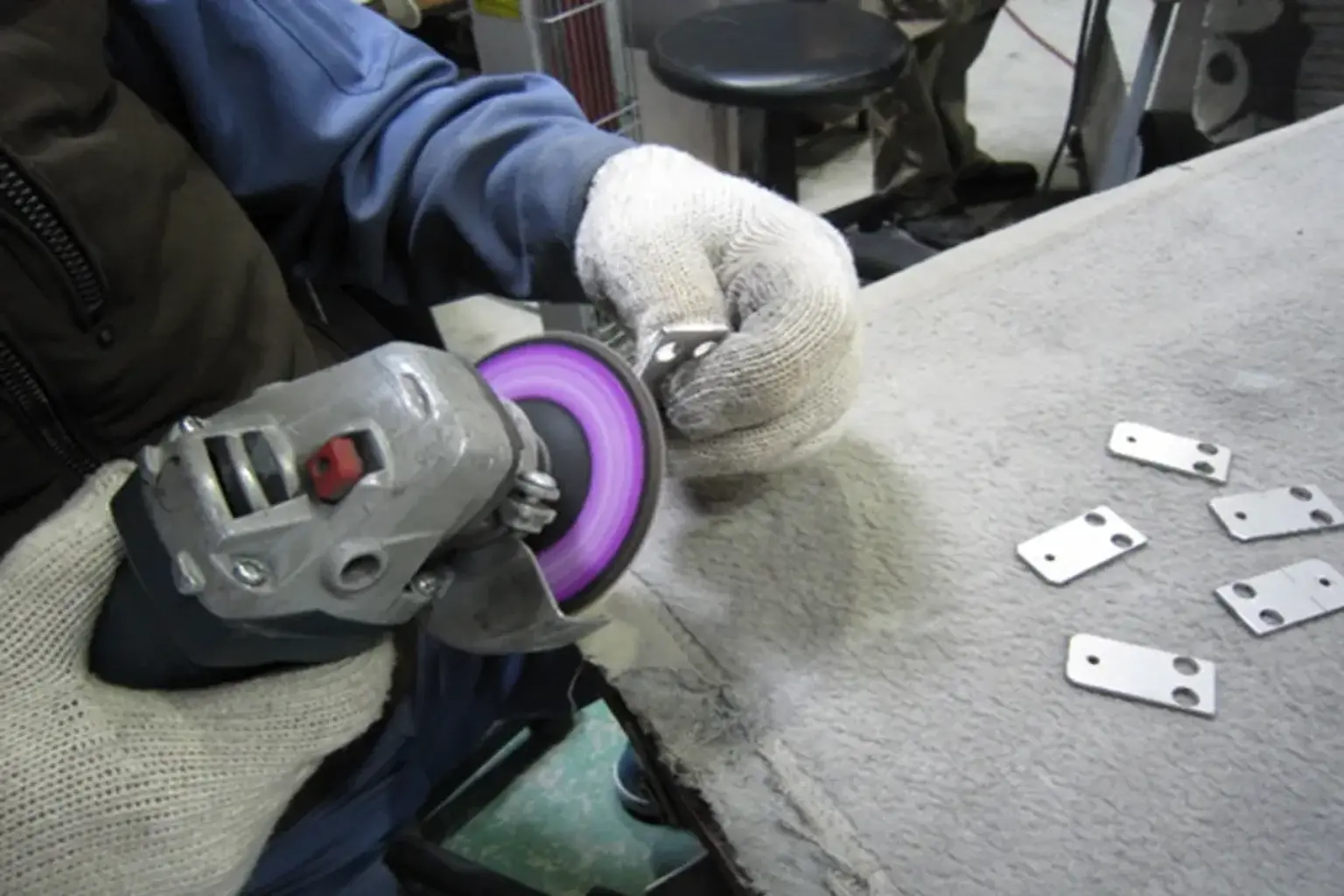
- Deburring. Cutting leaves small burrs and sharp edges. Deburring removes these — manually or with automated equipment — to achieve clean, accurate, and safe-to-handle parts.
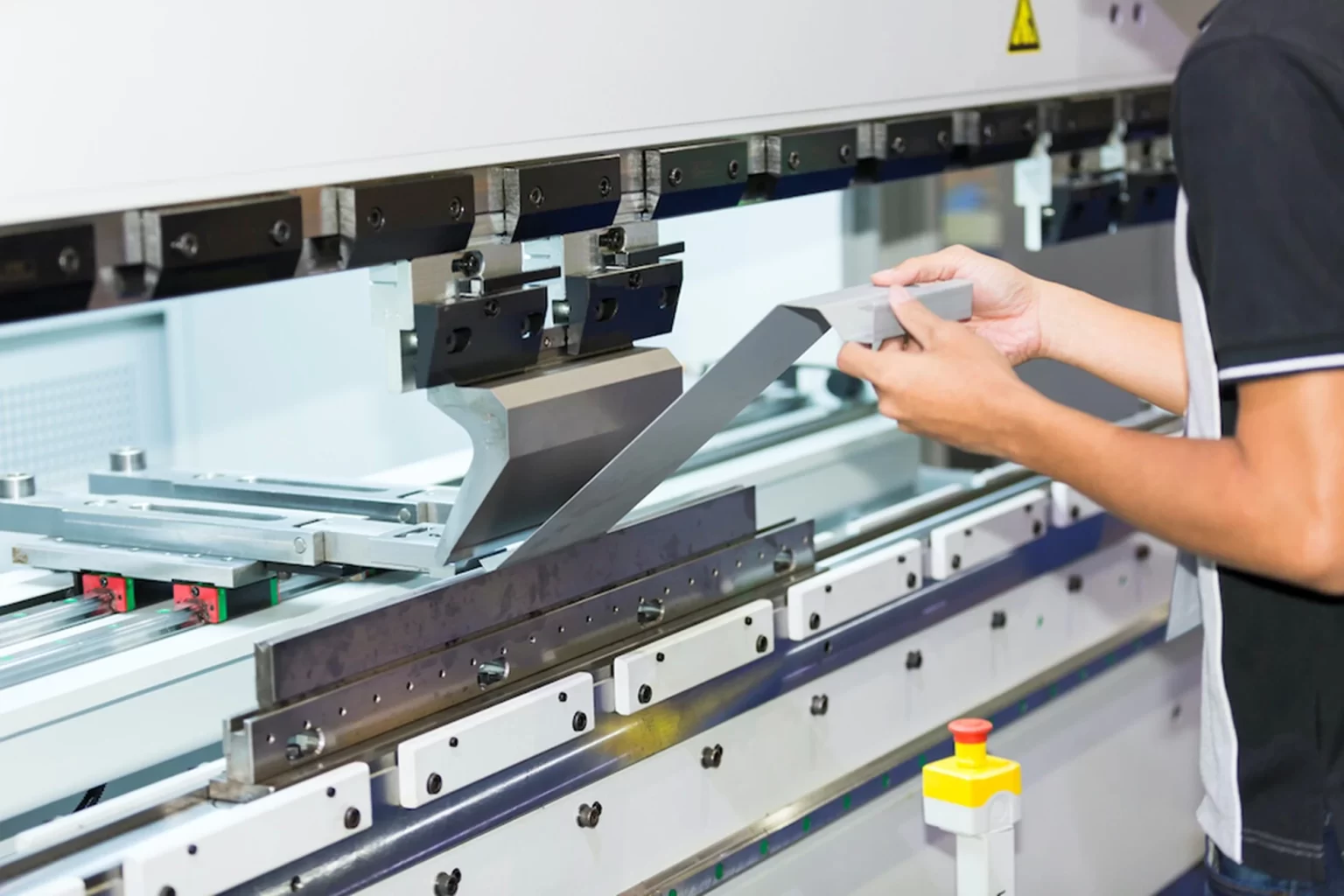
- Bending. The flat blank is formed into its final 3D shape using a press brake. Precise control of bend angles and radii turns the sheet into brackets, boxes, channels, and complex profiles.
- Finishing. Where welding is involved, finishing removes thermal distortion, grinds down weld build-up, and smooths surfaces through polishing or other treatments.
- Assembly. Multiple parts are joined using fasteners such as bolts, nuts, and rivets — chosen where welding-level strength is not required or where later disassembly is needed. Welded assembly is used where maximum joint strength matters.
- Inspection. Before shipping, parts are checked for dimensional accuracy and appearance using calipers, gauges, and — in more advanced setups — optical or coordinate measuring machines.
Common sheet metal materials
Material choice affects strength, corrosion resistance, weight, and cost. Three material families dominate sheet metal fabrication.
Steel
Steel is valued for its strength and affordability. Galvanised and electrogalvanised grades such as SGCC and SECC are common in sheet metal work. SECC offers excellent paint adhesion for clean finishes, while SGCC provides enhanced corrosion resistance suited to outdoor use. Uncoated steel typically needs a surface treatment such as painting or plating to resist corrosion.
Stainless steel
Stainless steel combines corrosion resistance, durability, and a clean appearance, making it a favourite for food processing, medical, and architectural parts. EN 1.4301 (SUS304) is the most common grade, offering good all-round corrosion resistance and suitability for cutting, bending, and welding. For aggressive environments, EN 1.4401 (SUS316) adds molybdenum for superior resistance to chemicals and saltwater.
Aluminium
Aluminium is lightweight, corrosion-resistant, and an excellent conductor of heat and electricity — ideal for aerospace, automotive, and electronics parts. A5052 is a popular alloy that balances strength, formability, and corrosion resistance. Aluminium does require care during processing: it reflects laser light (needing higher laser power), can crack when bending thicker sheets, and demands specialised welding techniques.
| Material | Key strengths | Considerations | Typical use |
|---|---|---|---|
| Steel (SGCC / SECC) | Strong, affordable, good paint adhesion | Uncoated steel needs surface treatment | Enclosures, brackets, structural parts |
| Stainless steel | Corrosion-resistant, durable, hygienic | Higher cost, work-hardens when machined | Food, medical, architectural parts |
| Aluminium (A5052) | Lightweight, conductive, corrosion-resistant | Reflects laser light, care needed when bending | Aerospace, automotive, electronics |
What parts are made from sheet metal
Sheet metal fabrication is ideal for custom parts that are thin-walled, formed from a flat blank, and often act as housings, mounts, or structural elements. Because meviy manufactures individually designed components from your own 3D CAD data — not catalogue or standard parts — the examples below refer to custom-engineered parts built to your specifications.
Typical custom sheet metal parts include enclosures and housings, control cabinets, cover panels and shrouds, mounting brackets, chassis and frames, cable trays, and machine guards. Any part that starts life as a flat sheet and is then cut and bent into shape is a strong candidate for sheet metal fabrication.
| Industry | Typical custom sheet metal parts |
|---|---|
| Electronics & electrical | Enclosures, control cabinets, shielding, mounting plates |
| Mechanical engineering | Machine guards, covers, frames, cable trays |
| Automotive | Brackets, heat shields, prototype body panels |
| Industrial equipment | Chassis, housings, structural supports |
| Architecture | Cladding, custom fixtures, decorative panels |
If your part starts as a flat sheet and is cut and bent to shape, it can typically be manufactured with meviy's sheet metal fabrication service — with instant pricing and a manufacturability check before you order.
Surface treatments for sheet metal
Surface treatments improve corrosion resistance, wear resistance, and appearance. Common options include painting and powder coating for durable, coloured finishes; plating for corrosion and wear protection; anodising for aluminium parts; and laser marking for permanent part numbers and labels. The right treatment depends on the material and the part's environment. meviy offers a range of surface treatments directly in the ordering flow — you can see the available options for your material and finish when you upload your part.
Frequently asked questions
What is the difference between sheet metal fabrication and machining?
Sheet metal fabrication forms parts from thin, flat sheets by cutting and bending — it adds shape without removing much material. Machining (such as milling or turning) removes material from a solid block to create the final shape. Sheet metal is ideal for thin-walled housings, brackets, and enclosures, while machining suits solid, precise parts like shafts and blocks. Many products combine both.
What materials can be used for sheet metal parts?
The most common sheet metal materials are steel (including galvanised grades like SGCC and SECC), stainless steel (such as EN 1.4301 and EN 1.4401), and aluminium (such as A5052). Each offers a different balance of strength, corrosion resistance, weight, and cost. The right choice depends on the part's function, environment, and appearance requirements.
Why does sheet metal design start with "unfolding"?
Sheet metal parts are cut from a single flat sheet and then bent into shape. Unfolding is the process of flattening a 3D design back into that flat pattern to check it can actually be produced. If a design cannot be unfolded into a single sheet, it cannot be fabricated as a sheet metal part — which is why unfolding is one of the first things checked in the design phase.
What is a press brake used for?
A press brake is the machine used for bending. It clamps the flat sheet metal blank and forms it along a straight line to a precise angle and radius. Press brakes create the bends that turn a flat blank into brackets, boxes, channels, and more complex profiles. Accurate control of bend angle and radius is essential for parts that must fit together correctly.