



Stainless steel is a corrosion-resistant steel alloy containing at least 10.5 % chromium. Its unique ability to form a self-healing oxide layer makes it one of the most widely used engineering materials — from food-grade housings and medical instruments to structural brackets and precision-machined components.
For mechanical designers, choosing the right stainless steel grade is a decision that directly affects machinability, cost, and part performance. This guide covers the main types of stainless steel, their properties, the EN grades most relevant to CNC machining and sheet metal fabrication, and practical design tips for working with this material.
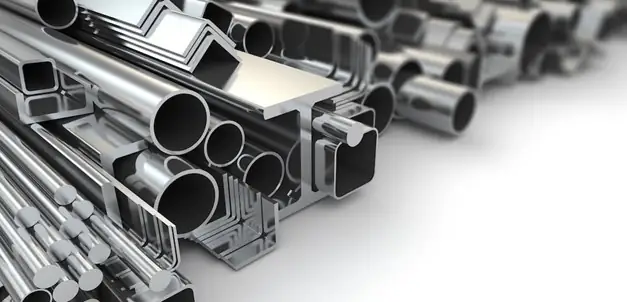
What is stainless steel
Stainless steel is a group of iron-based alloys defined by a minimum chromium content of 10.5 % and a carbon content typically below 1.2 %. The chromium reacts with oxygen to form a thin, transparent chromium oxide film on the surface. This passive layer is what gives stainless steel its characteristic resistance to rust and corrosion — and unlike a coating, it regenerates on its own whenever the surface is scratched or damaged.
Beyond chromium, most stainless steel grades contain additional alloying elements such as nickel, molybdenum, manganese, or nitrogen. These elements fine-tune properties like strength, formability, heat resistance, and resistance to specific corrosive environments. The exact combination determines which family a grade belongs to — and which applications it is best suited for.
Main types of stainless steel
Stainless steels are grouped into three main families based on their crystal structure and composition. Each family has distinct mechanical properties, corrosion behaviour, and machining characteristics.
Austenitic stainless steel
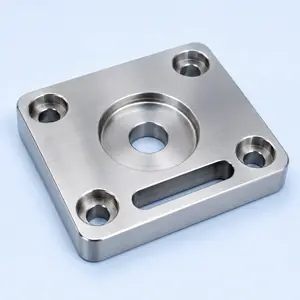
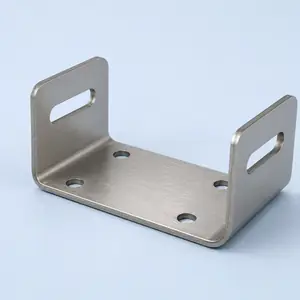
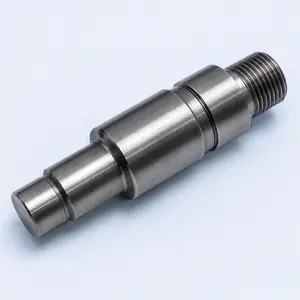
Austenitic grades are the most widely used family, accounting for roughly two thirds of all stainless steel production. They contain less than 0.15 % carbon, 16–20 % chromium, and more than 8 % nickel. The nickel stabilises the austenitic crystal structure, which gives these steels excellent ductility, formability, and weldability. Austenitic stainless steels are non-magnetic in the annealed condition and offer the best overall corrosion resistance of the three families. Their main limitation is susceptibility to stress corrosion cracking in chloride-rich environments. Typical applications include food processing equipment, chemical tanks, and precision-machined mechanical components.
Ferritic stainless steel
Ferritic grades contain 10.5–30 % chromium with little or no nickel, which makes them significantly more affordable than austenitic grades. They are magnetic, resist stress corrosion cracking, and offer moderate corrosion resistance. Formability and weldability are more limited compared to austenitic grades, and toughness drops at low temperatures. Ferritic stainless steels are commonly found in automotive exhaust systems, architectural cladding, and household appliances.
Martensitic stainless steel
Martensitic grades contain 0.1–0.4 % carbon and 12–18 % chromium. Through quenching and tempering, they achieve the highest hardness of all stainless steel families — but at the cost of lower corrosion resistance and reduced weldability. They are magnetic and well suited for applications that demand wear resistance and high strength, such as cutting tools, turbine blades, and valve components exposed to elevated temperatures.
| Property | Austenitic | Ferritic | Martensitic |
|---|---|---|---|
| Corrosion resistance | Very good | Moderate | Limited |
| Hardness | Moderate | Moderate | Very good |
| Weldability | Very good | Limited | Limited |
| Formability | Very good | Moderate | Limited |
| Magnetic | No | Yes | Yes |
| Relative cost | Higher | Lower | Medium |
| Typical applications | Food processing, chemical equipment, precision parts | Automotive exhaust, cladding, appliances | Cutting tools, turbine blades, valve components |
Stainless steel grades for CNC and sheet metal parts
Not every stainless steel grade is equally suited for automated manufacturing. The grades listed below are commonly used in CNC milling, CNC turning, and sheet metal fabrication — and they are all available for instant quoting on meviy.
| EN standard | Family | Key characteristics |
|---|---|---|
| EN 1.4301 | Austenitic | The most common stainless steel grade worldwide. Good all-round corrosion resistance, excellent weldability, moderate machinability. The default choice when no special requirements apply. |
| EN 1.4305 | Austenitic | A free-machining variant of 1.4301 with added sulphur. Significantly better machinability, making it ideal for complex CNC-turned and milled parts. Slightly lower corrosion resistance and weldability. |
| EN 1.4401 | Austenitic | Contains 2–3 % molybdenum, which provides superior resistance to pitting and crevice corrosion — especially in chloride-containing environments. Often used in marine, chemical, and pharmaceutical applications. |
| EN 1.4404 | Austenitic | The low-carbon version of 1.4401. Reduced risk of intergranular corrosion after welding, making it the preferred grade for welded structures in corrosive environments. |
| EN 1.4016 | Ferritic | A nickel-free grade with good formability and moderate corrosion resistance. Cost-effective alternative where high corrosion resistance is not required. Magnetic. |
Advantages and disadvantages of stainless steel
Stainless steel is valued for its corrosion resistance, strength, and longevity — but it comes with trade-offs that matter in design and manufacturing. The table below summarises the main advantages and disadvantages relevant to mechanical component design.
| Advantages | Disadvantages |
|---|---|
| Corrosion resistance — the self-healing chromium oxide layer protects against rust, weathering, and many chemical environments | High friction — the sliding resistance of stainless steel against other metals is roughly twice that of carbon steel, which affects moving assemblies |
| Heat resistance — maintains tensile strength up to approximately 500 °C, and low thermal conductivity makes it useful for thermal insulation (e.g. thermos flasks) | Work hardening — bending, forming, and machining can significantly increase surface hardness, reducing reworkability and accelerating tool wear |
| High strength — carbon and alloying elements provide higher tensile strength than plain carbon steel, especially after heat treatment in martensitic grades | Limited heat dissipation — low thermal conductivity makes stainless steel a poor choice where heat must be transferred away quickly; aluminium is often preferred in such cases |
| Hygienic surface — the smooth, non-porous surface is easy to clean and resistant to bacterial growth, making it standard in food and medical applications | Higher material cost — alloying elements like nickel and molybdenum make stainless steel more expensive than carbon or structural steel |
Design tips for machining stainless steel
Stainless steel is more demanding to machine than carbon steel or aluminium. The following tips help you avoid common issues and get better results — whether you are designing CNC-milled, CNC-turned, or sheet metal parts.
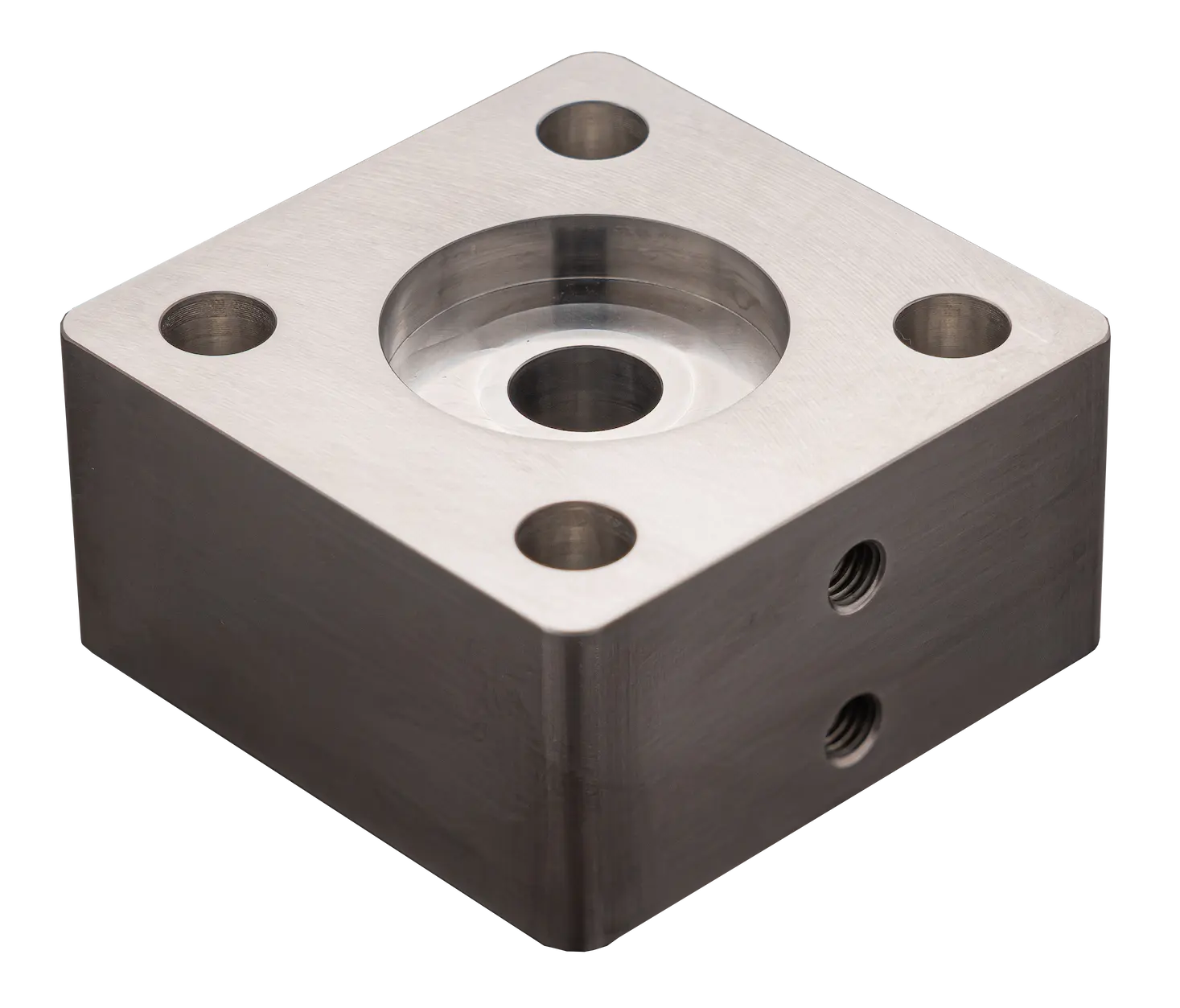
- Choose a free-machining grade where possible. If your part does not require welding or maximum corrosion resistance, EN 1.4305 machines significantly faster than EN 1.4301 and produces better surface finishes with less tool wear.
- Account for work hardening. Stainless steel — especially austenitic grades — hardens rapidly under mechanical stress. Avoid repeated passes at shallow depths; instead use fewer, deeper cuts with consistent feed rates to stay below the hardened layer.
- Design for heat management. Because stainless steel conducts heat poorly, most of the cutting energy stays concentrated at the tool tip. Where your design allows it, favour geometries that enable efficient coolant access to the cutting zone.
- Specify tolerances deliberately. Tighter tolerances on stainless steel parts increase machining time and cost more than on aluminium or carbon steel. Define tight tolerances only on functional surfaces — and leave non-critical dimensions at standard accuracy.
- Consider bend behaviour for sheet metal. Stainless steel springs back more than mild steel after bending. Design with slightly larger bend radii and be aware that minimum bend radius recommendations differ between austenitic and ferritic grades. See the meviy sheet metal fabrication page for available materials and bending capabilities.
Frequently asked questions
What makes stainless steel "stainless"?
The chromium in stainless steel reacts with oxygen in the air to form a thin, invisible chromium oxide film on the surface. This passive layer acts as a barrier against rust and corrosion. Unlike a paint or coating, the film is self-healing — if the surface is scratched, the layer reforms on its own as long as oxygen is present.
Can stainless steel rust?
Yes, under certain conditions. Prolonged exposure to chloride-rich environments (such as saltwater or de-icing salts), contact with carbon steel that transfers iron particles, or using the wrong grade for the application can all cause localised corrosion or pitting. Choosing the right grade for the environment — for example, a molybdenum-containing grade like EN 1.4401 for chloride exposure — is the most effective way to prevent this.
What is the difference between 304 and 316 stainless steel?
Both are austenitic grades with similar mechanical properties. The key difference is that 316 (EN 1.4401) contains 2–3 % molybdenum, which gives it significantly better resistance to pitting and crevice corrosion — especially in environments with chlorides or acids. 304 (EN 1.4301) is the more widely used and more affordable option, and it performs well in most general-purpose applications where aggressive chemical exposure is not a concern.
Is stainless steel harder to machine than carbon steel?
Generally, yes. Austenitic stainless steels in particular tend to work-harden during machining, which increases tool wear and requires more careful selection of cutting speeds and feeds. They also conduct heat poorly, so cutting temperatures run higher. Free-machining grades like EN 1.4305 significantly reduce these challenges. For designers, the practical takeaway is that tolerances, surface finish requirements, and grade selection all have a bigger impact on cost and lead time with stainless steel than with carbon steel.