


In the world of mechanical components, jigs and fixtures play a pivotal role – even if the terms are not very familiar to those outside manufacturing. Without them, consistent quality and efficient production would hardly be possible.
In this article, we answer the fundamental question “What is a jig?”, explain how jigs differ from fixtures, and look at where they are used, which materials they are made of and how you can get custom jig and fixture parts quickly.
What is a jig and how does it work?
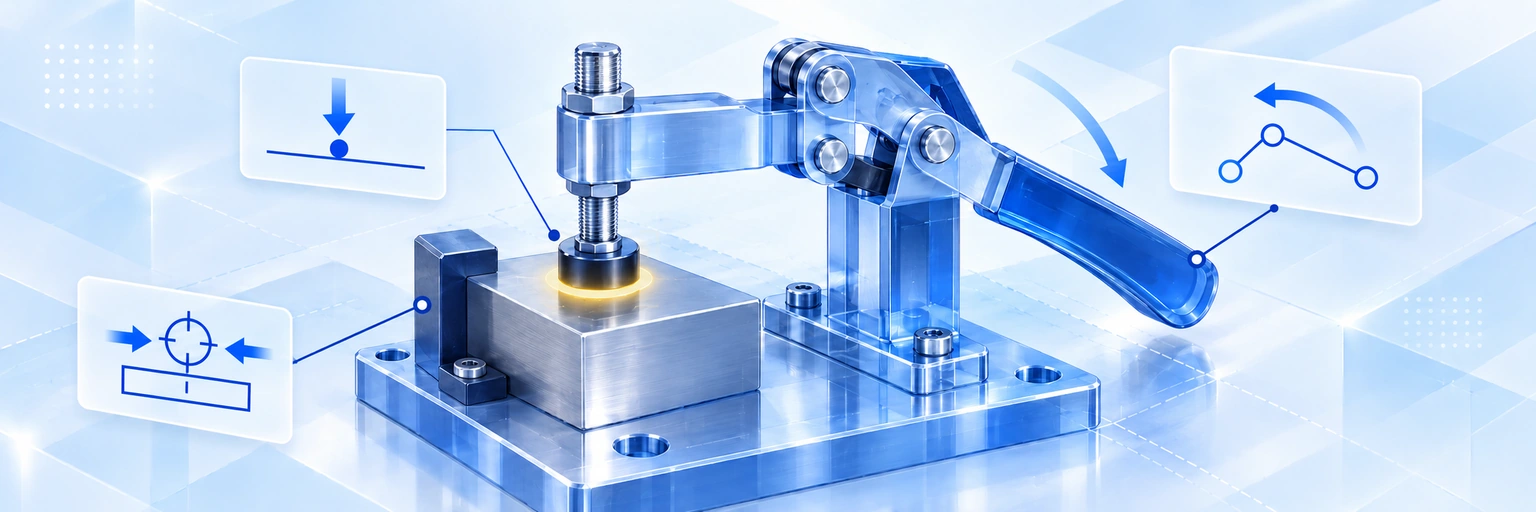
A jig is a device that supports machining and assembly: it holds the workpiece in place and guides the process. For this reason, jigs are also referred to as auxiliary tools. Imagine trying to drive a screw into a workpiece with a contoured shape on a flat workbench – it is difficult to hold it firmly. A jig stabilises the workpiece and makes the task much easier.
Beyond stabilising the workpiece, jigs ensure consistent quality and speed up the work process, because every part is held and positioned in exactly the same way.
Broadly speaking, there are two types: jigs of various shapes used in production and assembly lines, and fixtures that hold workpieces during machining. Because jigs and fixtures are tailored to the specific part and process, they are not mass-produced. They are usually made one by one – by production engineers or by specialised jig manufacturers.
Jig vs fixture: what’s the difference?
In everyday shop language, “jig” is often used as an umbrella term. Strictly speaking, however, jigs and fixtures have different functions:
| Aspect | Jig | Fixture |
|---|---|---|
| Main function | Holds the workpiece and guides the tool | Holds and locates the workpiece |
| Tool guidance | Yes, e.g. via drill bushings | No – the tool path is set by the machine or CNC program |
| Mounting | Often not fixed to the machine table | Usually fixed to the machine table |
| Typical processes | Drilling, reaming, tapping, assembly | Milling, turning, grinding, welding, inspection |
| Example | Drill jig | Milling fixture |
Jigs used in manual operations
Jigs used in production and assembly lines mainly include:
- Stabilisers that hold the workpiece in place during processing or measurement by operators or machines
- Positioning devices for tasks such as bonding
- Guides for inserting other components or tools, functioning like a mould during insertion
- Masking devices that protect other areas from contamination during painting or sealing
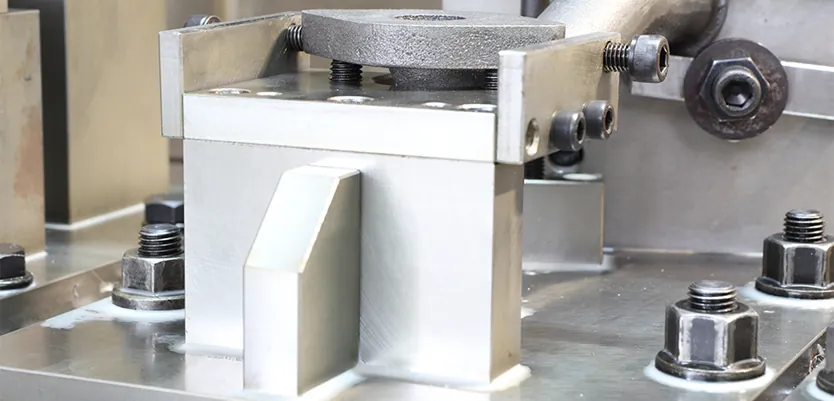
These jigs come in many materials and shapes, depending on their purpose. For lighter tasks such as manual operations, jigs made of lightweight, flexible plastics like MC nylon are common, sometimes combined with small clamps. For demanding conditions such as high temperatures or heavy loads – for example in hardening – jigs are made of robust metals. Some jigs are even automated: they act as a device in their own right and activate their clamps automatically as soon as the workpiece is inserted.
Fixtures used in machining
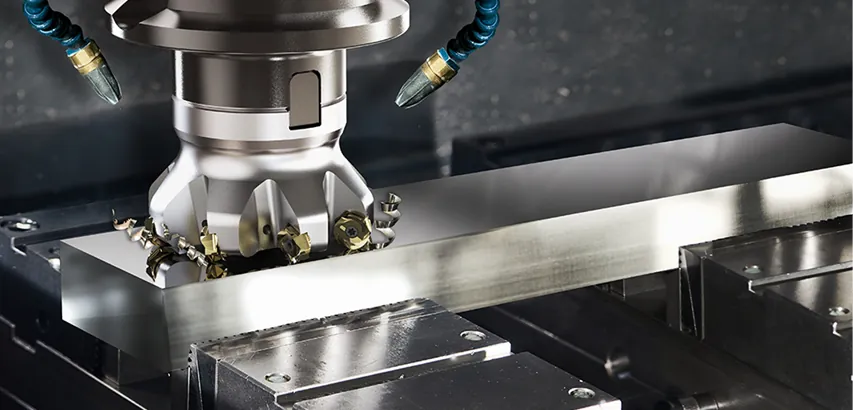
The image above shows a fixture in mechanical processing: the part that carries the machined metal workpiece is the fixture.
While jigs in production lines vary widely in shape and material, fixtures used on CNC and other machine tools are predominantly made of robust metals such as stainless steel. Their size depends on the type of processing – large fixtures sometimes have to be moved by crane.
Unlike quick-release clamps, fixtures secure the workpiece with sturdy mechanisms such as screws. Fixtures for CNC machines in particular often feature numerous threaded holes, so that several workpieces can be clamped on a single fixture.
Common materials for jigs and fixtures
The right material depends on the load, the environment and the surface of the workpiece. These materials are widely used for jig and fixture parts:
| Material | Key properties | Typical use |
|---|---|---|
| Aluminium (e.g. A2017, EN AW-5052, EN AW-6061 equiv.) | Lightweight, easy to machine | Base plates, positioning blocks, jigs for manual operations |
| Steel (e.g. EN 1.0038 equiv.) | Rigid and cost-effective; requires corrosion protection | Base plates and fixtures for high loads |
| Stainless steel (e.g. EN 1.4301 equiv.) | Corrosion resistant | Fixtures for wet or clean environments |
| POM (polyacetal) | Low friction, dimensionally stable | Guides and nests that protect workpiece surfaces |
| MC nylon | Tough and lightweight | Jigs for manual operations, workpiece supports |
Jig and fixture parts you can order with meviy
Because jigs and fixtures are one-off designs, they are exactly the kind of part that meviy is made for: individually designed custom parts, manufactured from your own 3D CAD data – no standard or catalogue parts.
- Base plates, blocks, holders and stops – produced by CNC milling
- Locating pins, bushings and shafts – produced by CNC turning
- Masks, guides and brackets made of sheet metal – produced by sheet metal fabrication
Simply upload your 3D model, select the material and get the price and delivery date instantly – no 2D drawing required.
Frequently asked questions about jigs
What is the difference between a jig and a fixture?
A jig holds the workpiece and guides the tool, for example via drill bushings. A fixture only holds and locates the workpiece; the tool path is set by the machine. In practice, “jig” is often used for both.
What are jigs made of?
Jigs for manual operations are often made of lightweight plastics such as MC nylon or POM. Jigs and fixtures for machining or high loads are usually made of aluminium, steel or stainless steel.
Who makes jigs and fixtures?
Jigs and fixtures are designed for a specific part and process, so they are made individually – by production engineers or specialised jig manufacturers. With meviy, you can order the custom parts for them directly from your 3D CAD data.
Why are jigs important in manufacturing?
Jigs make sure every workpiece is held and positioned in the same way. This leads to consistent quality, fewer errors and faster processes – in manual assembly as well as on CNC machines.
Conclusion
Jigs are relatively unknown outside the manufacturing industry. In reality, however, they play a crucial role in production – much like machine tools themselves. Considering the jigs and fixtures needed for processing at the design stage brings many benefits, such as lower costs and higher quality.