



Sheet metal parts are used in almost every industry because they are versatile and cost-effective. But because they are relatively thin, they can lack rigidity and strength under certain loads. With the right design decisions, you can strengthen sheet metal parts considerably — often without simply increasing the sheet thickness.
This article presents four design tips to increase the strength and rigidity of sheet metal components. As an example, we use the machine below: one conveyor transports workpieces to a rotating stage, and a second conveyor takes the workpieces from the rotating stage to the next process. The yellow brackets that support the conveyors are the parts we will reinforce.
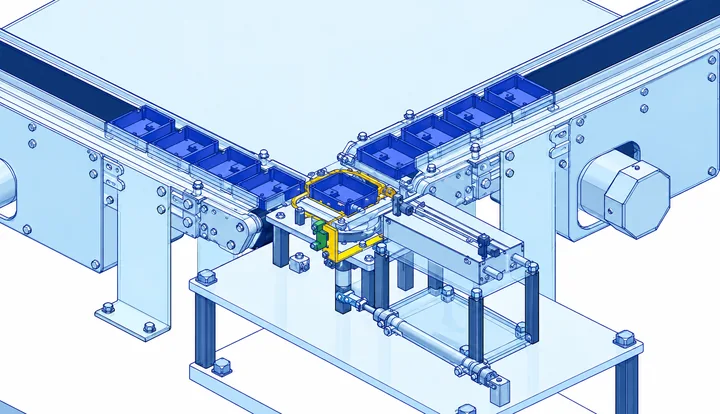
Four ways to strengthen sheet metal at a glance
Each method has its own advantages and limitations. The table gives you a quick overview before we look at each one in detail.
| Method | Extra part | Joining | Main benefit | Watch out for |
|---|---|---|---|---|
| Welded rib | Yes (rib) | Welding | Most common and effective way to add strength | Notch the rib corners to clear the bend radius |
| Screwed rib | Yes (rib) | Screws | Can be added after the bracket is installed | Screw head interference and thread limits in the base |
| Formed gusset | No | None — formed into the bend | No extra parts or material | Smaller strength gain than ribs |
| Reinforcing bracket | Yes (bracket) | Screws through slotted holes | Absorbs width variations, no screws into the base | Needs a paired bracket to connect to |
1. Weld ribs to the bracket
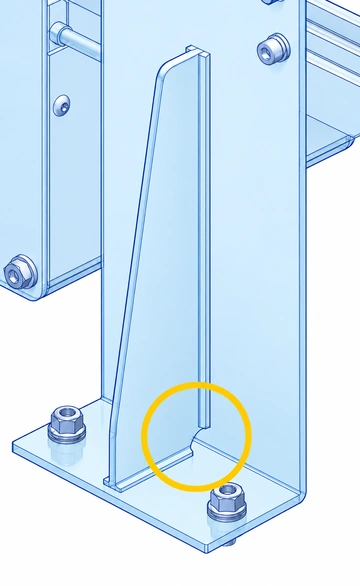
The first solution that comes to mind is adding ribs. A rib is welded into the bracket, as shown in the illustration above, and stiffens the angle between the two legs. Adding ribs is the most frequently used method to increase the strength of sheet metal parts.
Pay attention to the bend, marked by the red circle. Notch the corner of the rib so that it leaves space around the bracket's bend radius. This way, the rib sits flush against both legs instead of resting on the radius, and the welded joint can transfer the load properly. With meviy, brackets and plate assemblies like this can be ordered as welded parts through sheet metal welding.
2. Screw ribs to the bracket
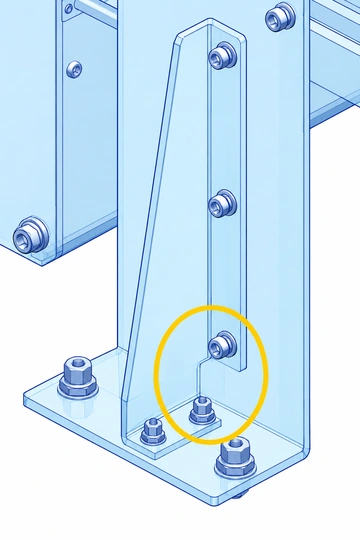
If the bend turns out to be too weak after the bracket has been installed, you can also attach ribs with screws. This makes it possible to reinforce the bracket later without welding.
Make sure the screw heads do not interfere with each other, as marked by the red circle. Also check how the rib is fixed to the base the bracket is mounted on: thin sheet material limits how many thread turns a tapped hole can provide. In that case, press-in nuts or friction-drilled tapped holes are useful alternatives, so plan the screw connection carefully.
3. Add formed gussets to the bend
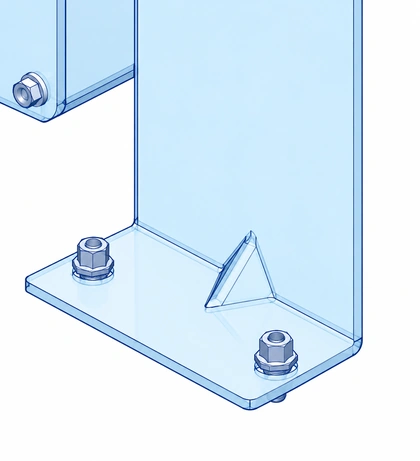
If welding ribs is not an option, a formed gusset is another way to stiffen the bend. A triangular stiffening rib is pressed directly into the bend of the bracket. This increases rigidity without adding components or using more material.
The strength gain is smaller than with ribs, though. Formed gussets are a good choice when you only need a slight increase in rigidity and want to avoid additional parts.
4. Insert a reinforcing bracket
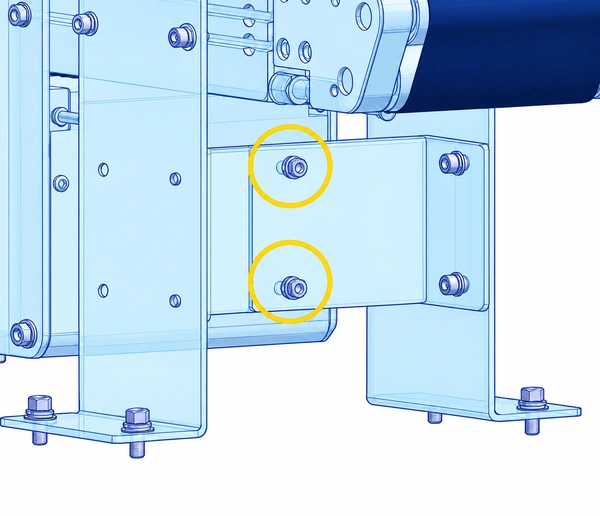
If the rigidity is still insufficient after the brackets have been installed, insert a reinforcing bracket that connects the two paired brackets. In the example, it is screwed between the two conveyor supports and braces them against each other.
The through holes for the screws are elongated. These slotted holes, easily produced by laser cutting, absorb variations in the width of the conveyor. Unlike screwed ribs, this design needs no screws into the base, so there is no risk of interference between rib screws and base screws.
Custom sheet metal parts from meviy
meviy manufactures individually designed custom sheet metal parts from your own 3D CAD data — not standard or catalogue parts. Brackets, ribs and reinforcing brackets like the ones in this example are typical meviy parts.
- Bent brackets, ribs and reinforcements through sheet metal fabrication
- Notches, cutouts and multiple bends for parts made by bending
- Tapped holes, press-in nuts and slotted holes for screwed connections
- Instant price and lead time from your 3D model — no 2D drawing required
Frequently asked questions about strengthening sheet metal
How can I make sheet metal stiffer without increasing its thickness?
Change the geometry instead of the thickness. Ribs, formed gussets in the bends and additional reinforcing brackets all increase rigidity, often with far less extra material and weight than a thicker sheet.
Should I weld or screw ribs to a sheet metal bracket?
Welded ribs are the most common and effective solution when you design the part from scratch. Screwed ribs are useful when you need to reinforce a bracket that is already installed, or when you want to avoid welding — but check the screw head clearance and the thread options in the base.
What is a gusset in sheet metal design?
A gusset is a triangular reinforcement that stiffens the angle between two legs of a part. It can be a separate rib welded or screwed into the bracket, or a formed gusset pressed directly into the bend.
Choosing the right reinforcement
Welded ribs offer the highest strength for new designs, screwed ribs let you reinforce parts afterwards, formed gussets add rigidity without extra parts, and reinforcing brackets stiffen paired brackets while absorbing dimensional variations. Choose the method based on the required strength, the available space and whether the part is already installed.