



Black oxide coating is a chemical surface treatment that turns steel components black by forming a thin black film on the surface. It brings together several practical benefits — corrosion resistance, low cost, dimensional stability, and strong adhesion — which is why it's so widely used on steel parts.
This article explains what black oxide coating is, how the process works, and where its real strengths and limits lie — so you can judge whether it's the right finish for your parts.
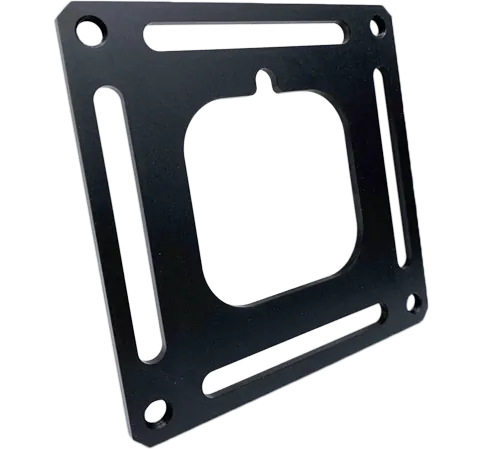
What is Black Oxide Coating?
Black oxide treatment forms a black iron-oxide film (Fe₃O₄, sometimes called "black rust") on the surface of iron and steel.
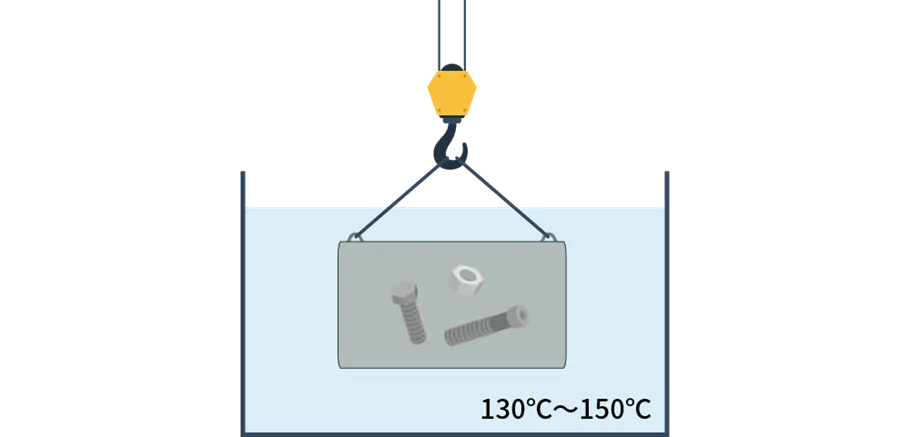
In the process, steel components are immersed in a solution of roughly 35–45% sodium hydroxide together with an oxidizing agent and a reaction accelerator, held at about 130–150 °C. The surface oxidizes and forms sodium ferrate, which is then reduced to build the Fe₃O₄ film on the component. The parts are usually finished with a rust-preventing oil — by application or immersion — giving the final, evenly "dyed-black" appearance.
Advantages of Black Oxide Treatment
Black oxide treatment combines several properties that make it useful across many fields:
Improved rust resistance
The film is robust and stable and suppresses the formation of red rust — the corrosion that seriously damages iron surfaces — to a certain degree. It won't match the protection of zinc or nickel plating, but it's a strong choice when you want some rust resistance together with a clean, dark appearance. The rust-preventing oil applied afterwards also stays on the surface, improving the lubricity of tools and mechanical components.
Reduced susceptibility to peeling
Because black oxide chemically converts only the outermost surface into a new substance rather than adding a separate layer, the finish doesn't peel off easily. That makes it a comparatively long-lasting surface treatment.
Minimal impact on dimensional accuracy
The film builds slowly and stays thin — roughly 1–2 µm — and grows from the surface inward. With treatment temperatures staying below 150 °C, there's no meaningful risk of heat-induced deformation. As a result, part dimensions remain largely unchanged before and after treatment, which is why black oxide is popular for high-precision components.
Cost-effective
The treatment solution is inexpensive and the process needs no electrodes or fixtures. Many components can be processed together in a single basket, which lowers the cost per part — regardless of their size or shape. That makes black oxide an economical way to finish a wide mix of components in one run.
Considerations Before Choosing Black Oxide
Black oxide offers clear benefits, but a few limitations are worth keeping in mind before you specify it:
Not every material is suitable
Black oxide works best on iron-based materials. Castings, quenched parts, wire-cut components, and similar materials can come out black with a reddish tint rather than a full black. Alloy steels high in elements such as chromium or nickel may turn out grey rather than black.
Rust progresses if the oil film breaks down
The Fe₃O₄ film on its own has only limited rust resistance, which is why its surface is normally sealed with rust-preventive oil. If that oil film is compromised, moisture and air can reach the fine pores in the film and red rust can set in. It's important to treat black oxide as a finish with real limits when it comes to rust prevention.
Conclusion
Black oxide coating forms an Fe₃O₄ film on the surface of iron and steel parts, giving them an attractive "dyed-black" look while keeping their dimensions intact. Compared with other finishes it's cost-effective and adds a certain level of rust resistance.
It's ideal wherever dimensional accuracy, a clean black appearance, and moderate rust protection matter together — for example on screws and bolts, tools, precision machinery components, molds, automotive parts, interior items, and even art pieces. Just bear in mind that it isn't built for prolonged outdoor use in very humid environments or near the sea, so it's not the right choice for parts exposed to those conditions.