


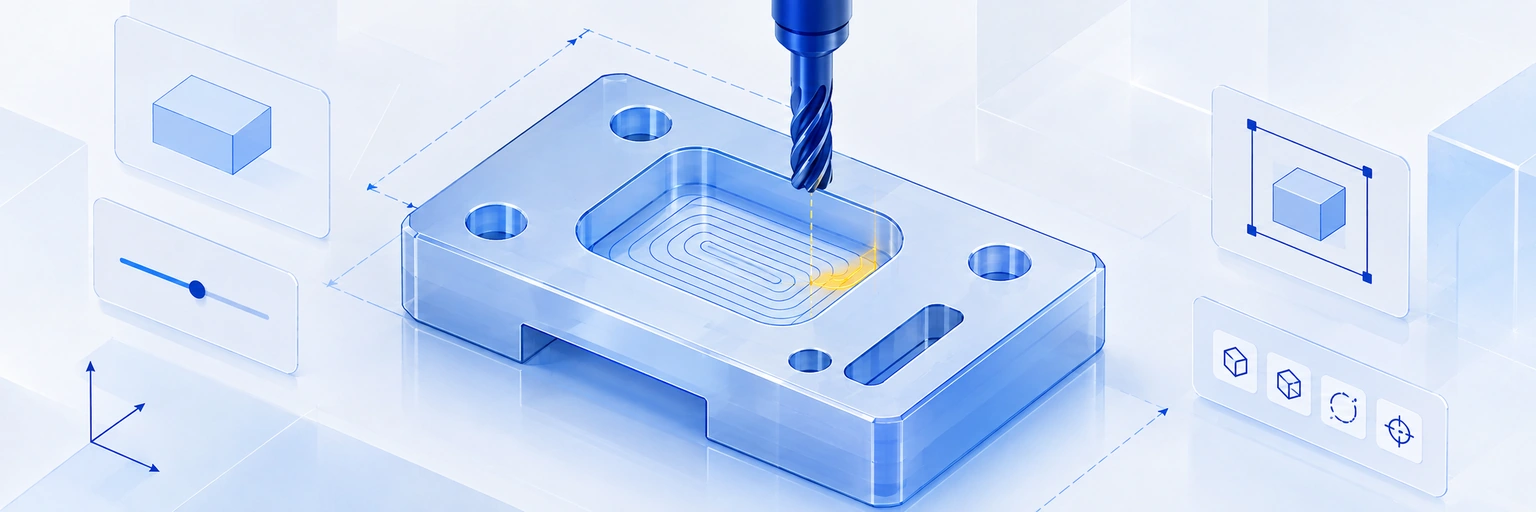
Milling is a machining process in which a rotating multi-edge cutting tool removes material from a workpiece to create precise shapes — flat surfaces, slots, pockets, contours, and complex 3D geometries. It is one of the most versatile and widely used manufacturing methods for custom mechanical components.
Whether you are designing a one-off prototype or preparing a production run, understanding how milling works, which machines and tools are involved, and what design choices affect cost and quality will help you get better parts faster. This guide covers the fundamentals of milling, the key machine types, the most common cutting tools, and practical design tips for CNC-milled parts.
What is milling
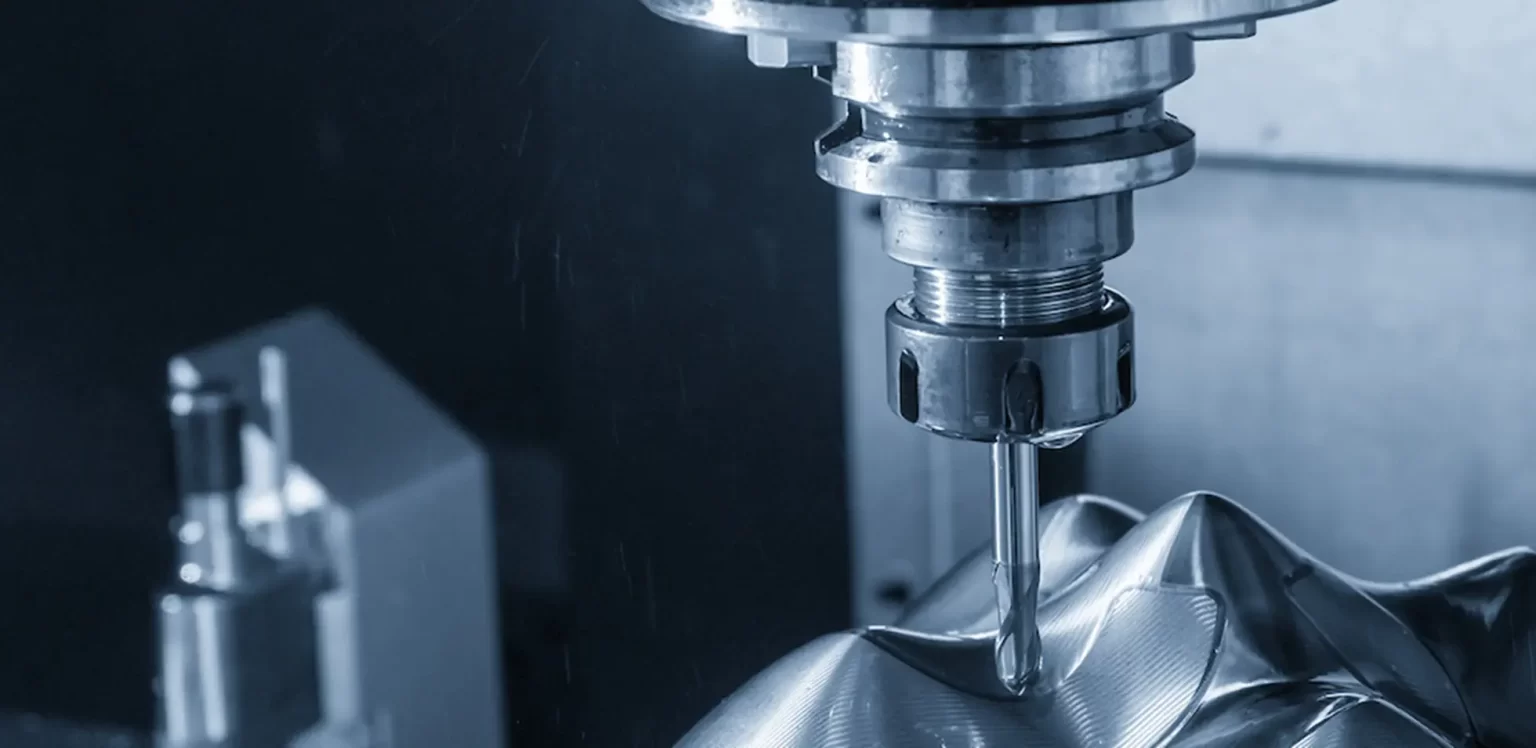
Milling is a subtractive manufacturing process: material is removed from a solid block (the workpiece) by a rotating cutting tool called a milling cutter. The workpiece is clamped to a worktable that moves along one or more axes, while the cutter spins at high speed. The combination of the cutter's rotation and the table's linear movement allows the tool to cut in three dimensions — producing flat surfaces, stepped profiles, slots, pockets, holes, and freeform contours.
Milling machines are classified by the orientation of the spindle. A vertical milling machine has its spindle perpendicular to the worktable and is the most common configuration for general-purpose work. A horizontal milling machine has its spindle parallel to the table surface and is typically used for heavy cuts, slab milling, and long workpieces. Modern CNC machining centres combine vertical or horizontal spindles with computer-controlled axes, automatic tool changers, and coolant systems — enabling complex, high-precision parts to be manufactured with minimal manual intervention.
Types of milling machines
The choice of milling machine determines the level of automation, precision, and complexity you can achieve. The three most relevant machine types for custom component manufacturing are outlined below.
Universal milling machine
The universal milling machine is a manually operated machine where the operator attaches cutting tools and controls the feed by hand. Output quality depends heavily on the operator's experience and skill. Because every movement is controlled manually, the process is slow but highly flexible — making universal mills well suited for one-off prototypes, complex repair jobs, and small batches where programming a CNC machine would not be economical.
NC milling machine
The NC (Numerical Control) milling machine replaces manual control with computer-driven instructions. The operator programs cutting paths, feed rates, and spindle speeds numerically, which eliminates the quality variations inherent in manual operation. NC milling machines deliver consistent, repeatable results and are significantly faster than universal mills for medium-complexity parts.
Machining centre (CNC)
The machining centre builds on NC technology by adding automatic tool changers, tool magazines, and — in modern machines — multiple controlled axes. A single machining centre can hold dozens of tools and switch between them automatically during a job, eliminating manual tool swaps and reducing setup time. This makes machining centres the standard choice for high-precision, high-volume component manufacturing. At meviy, machining centres are the primary machines used to manufacture CNC-milled parts.
| Feature | Universal mill | NC milling machine | Machining centre (CNC) |
|---|---|---|---|
| Control | Manual | Numerical (computer) | Full CNC with auto tool change |
| Precision | Operator-dependent | High, repeatable | Very high, repeatable |
| Automation | None | Partial | Full |
| Tool changes | Manual | Manual | Automatic |
| Best suited for | Prototypes, repairs, small batches | Medium-complexity parts, consistent quality | Complex parts, high precision, production runs |
Common milling tools and their uses
The cutting tool is just as important as the machine itself. Each tool geometry is optimised for a specific type of cut. Choosing the right tool affects surface finish, dimensional accuracy, and machining time.
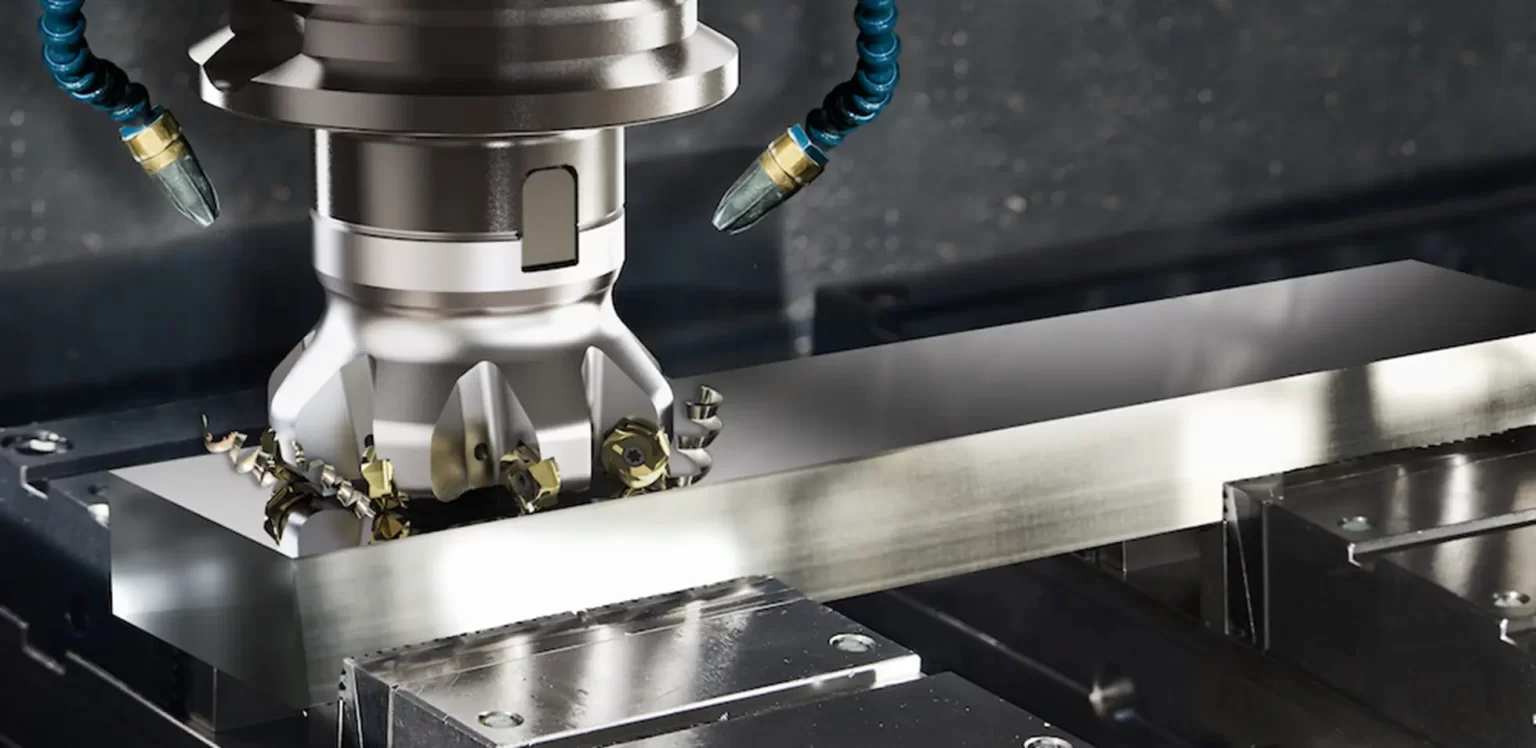
Face milling cutter
The face milling cutter has multiple cutting edges arranged around the outer circumference of a disc. It rotates while moving parallel to the workpiece surface, removing material over a wide area in a single pass. This makes it the most efficient tool for producing large, flat surfaces. Face milling cutters are primarily used on vertical milling machines and machining centres and are the most commonly used milling tool overall.
End mill
The end mill has a slender, cylindrical shape with cutting edges on the tip and along the sides. It is the most versatile milling tool, capable of producing flat surfaces, steps, slots, pockets, and contours. End mills come in a wide variety of diameters and flute counts, and they can handle intricate geometries that face milling cutters cannot reach. Their versatility makes them the workhorse tool in most CNC machining centres.
Groove milling cutter
The groove milling cutter (also called a slotting cutter) uses circular blades to cut narrow channels into the workpiece. The width and depth of the groove are determined by the blade's diameter and width. Compared to using an end mill for the same task, groove milling cutters offer faster cutting speeds and higher precision — especially when machining multiple long, deep grooves in a single setup.
Plain milling cutter
The plain milling cutter is a cylindrical tool with cutting edges along its outer surface. It is mounted on horizontal milling machines and used for flat surface machining across the full width of the workpiece. While efficient for material removal, plain milling cutters typically deliver slightly lower surface precision than face milling cutters.
| Tool | Typical application | Surface precision | Machine type |
|---|---|---|---|
| Face milling cutter | Large flat surfaces, facing operations | High | Vertical / CNC |
| End mill | Slots, pockets, steps, contours, 3D shapes | High | Vertical / CNC |
| Groove milling cutter | Narrow grooves, keyways | High | Horizontal / CNC |
| Plain milling cutter | Wide flat surfaces, slab milling | Moderate | Horizontal |
What shapes can you mill
Milling can produce a wide range of geometries from a single block of material: flat surfaces, stepped profiles, rectangular pockets, slots, grooves, keyways, holes, and even freeform 3D contours on multi-axis machining centres. Geometries that are difficult to mill include deep narrow cavities, features on inaccessible underside faces, and very thin walls that would deflect during cutting.
For a detailed overview of which features, materials, and surface treatments are available — and practical guidance on designing parts that are cost-effective to machine — see the meviy CNC milling service page.
Frequently asked questions
What is the difference between milling and turning?
Both are subtractive machining processes, but they work in opposite ways. In milling, the cutting tool rotates while the workpiece is held stationary (or moves linearly). In turning, the workpiece rotates while the cutting tool moves along it. Milling is used for prismatic parts with flat surfaces, pockets, and slots. Turning is used for rotationally symmetric parts like shafts, bushings, and pins. Many modern CNC machining centres can combine both processes in a single setup.
What is the difference between 3-axis and 5-axis milling?
A 3-axis milling machine moves the cutting tool (or workpiece) along three linear axes: X, Y, and Z. This covers most standard geometries but requires re-clamping the part to access different faces. A 5-axis machine adds two rotational axes, allowing the tool to approach the workpiece from virtually any angle in a single setup. This enables more complex geometries, reduces the number of setups, and often improves surface finish — but comes at a higher machine cost. meviy uses 3-axis machining with processing from up to six sides.
What materials can be CNC milled?
CNC milling works with a wide range of materials, including aluminium, carbon steel, stainless steel, copper, brass, and engineering plastics such as POM (acetal), nylon, and PEEK. The choice of material affects cutting speeds, tool selection, achievable tolerances, and cost. Softer materials like aluminium machine faster and with less tool wear, while harder materials like stainless steel require more careful parameter selection. For rotationally symmetric parts, CNC turning is often the more efficient process; for flat components from metal sheets, sheet metal fabrication may be the better fit.
How is CNC milling different from manual milling?
In manual milling, the operator controls every movement by hand — feed direction, speed, and depth of cut. In CNC milling, all of this is programmed digitally and executed by the machine automatically. CNC milling delivers higher precision, better repeatability, and faster cycle times, especially for complex parts or production runs. Manual milling still has its place for quick one-off jobs and repairs where programming would take longer than simply machining the part.